TAB AML/CTF training is an important part of understanding the separate compliance responsibilities of registered clubs and wagering providers. However, clubs that operate electronic gaming machines (EGMs) must also ensure their own employees receive appropriate AML/CTF training.
During a recent independent evaluation of a registered club’s Anti-Money Laundering and Counter-Terrorism Financing (AML/CTF) program, an important question was raised:
Why can’t the club rely on TAB’s AML/CTF training to meet its own AML/CTF training obligations?
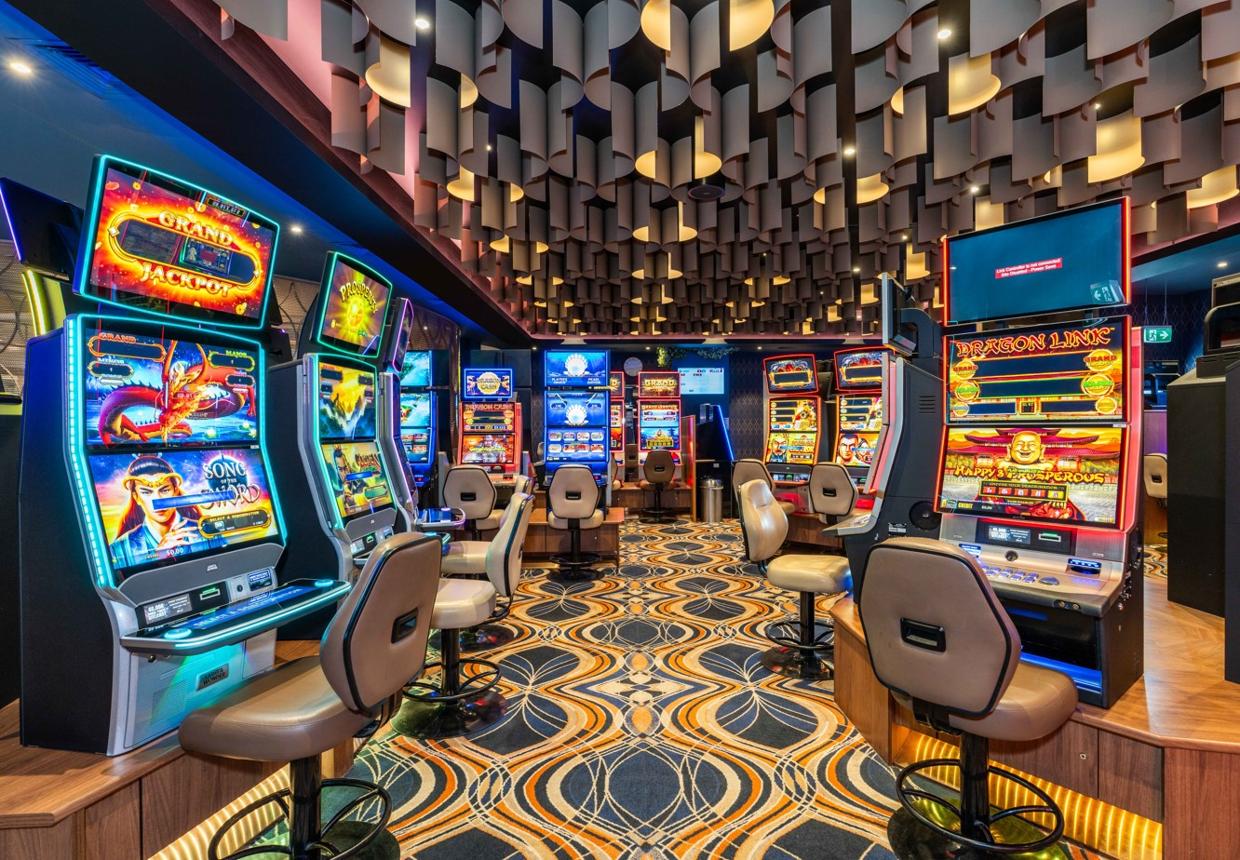
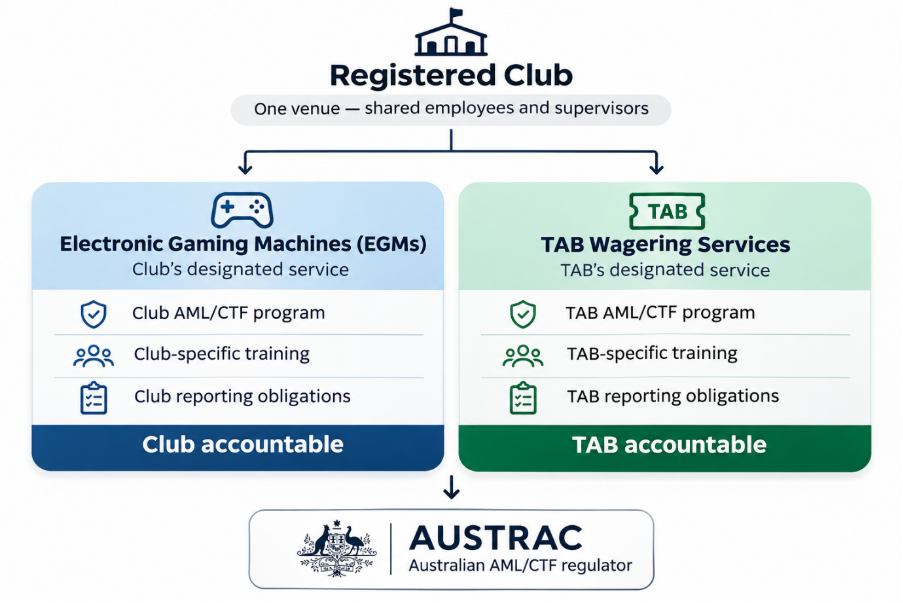
It is a reasonable question. Many registered clubs provide both electronic gaming machines and TAB wagering facilities within the same venue. In most cases, the same employees work across both areas.
However, while both activities fall within Australia’s AML/CTF regulatory framework, they involve different designated services, risks, reporting arrangements, procedures and responsibilities.
Understanding why TAB AML/CTF training cannot automatically replace club-specific training is essential for boards, chief executive officers, compliance officers, supervisors and frontline employees.
What Is a Designated Service Under AML/CTF?
Under the AML/CTF Act, certain services are classified as designated services because they may be exposed to money laundering, terrorism financing and other financial crime risks.
An organisation providing a designated service with the required Australian geographical connection generally becomes a reporting entity under the legislation, subject to any applicable exemptions.
Within a registered club, two distinct gambling activities may be undertaken:
- Operating electronic gaming machines and providing associated gaming machine services.
- Providing access to wagering services through a TAB agency or wagering facility.
Although these activities occur on the same premises, it is important to understand who legally provides each designated service.
The AML/CTF obligations attach to the provider of the designated service, rather than simply to the premises in which the service is provided.
For further information, registered clubs can refer to AUSTRAC’s Regulatory Guide for Pubs and Clubs, which explains the AML/CTF regulatory framework applicable to these venues.
Electronic Gaming Machines: The Club’s AML/CTF Responsibilities
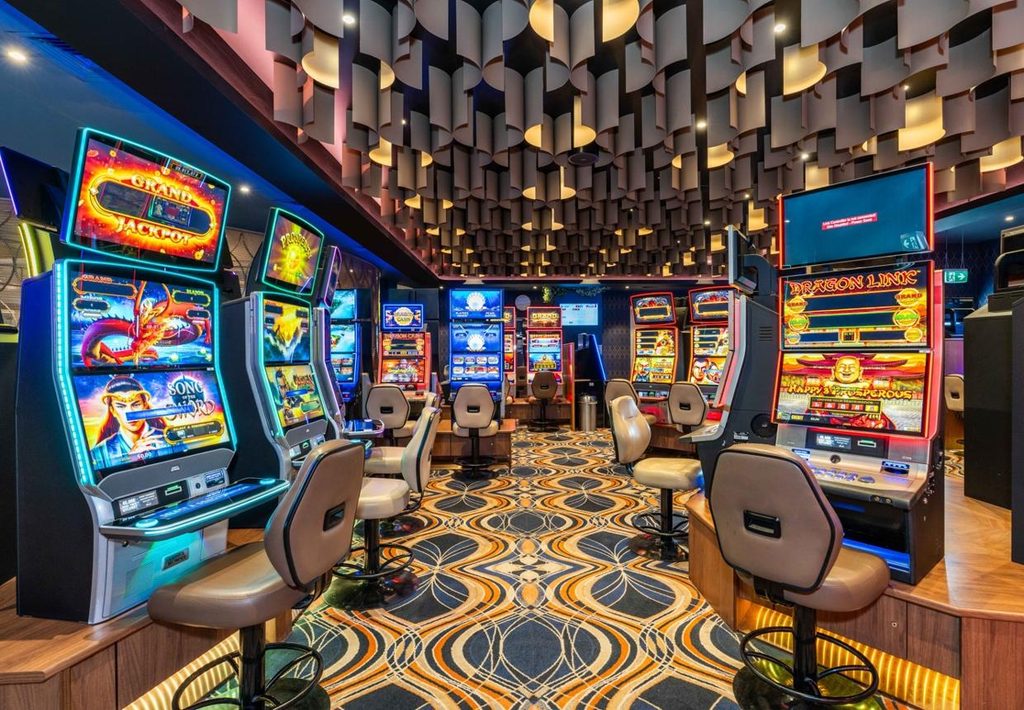
Where a registered club holds the relevant entitlements to operate electronic gaming machines, the club is a reporting entity under the AML/CTF Act.
The club is responsible for identifying, assessing, managing and mitigating the money laundering, terrorism financing and proliferation financing risks arising from its designated services, subject to applicable exemptions.
For clubs required to maintain a full AML/CTF program, this includes:
- Developing and maintaining an AML/CTF risk assessment.
- Developing and implementing AML/CTF policies and procedures.
- Appointing an AML/CTF compliance officer.
- Providing appropriate employee training.
- Conducting customer due diligence.
- Monitoring customer behaviour and transactions.
- Submitting applicable reports to AUSTRAC.
- Maintaining appropriate records.
- Conducting independent evaluations.
- Establishing appropriate board and senior management oversight.
These obligations belong to the club. The club cannot transfer these obligations to TAB simply because it also operates a TAB facility.
This is why TAB AML/CTF training cannot automatically satisfy the club’s own training requirements. The club must ensure its training reflects its designated services, individual risk assessment, policies, procedures and regulatory responsibilities.
TAB Wagering: Separate AML/CTF Responsibilities
A registered club that provides a Totalisator Agency Board (TAB) facility acts as an agent for the wagering provider.
AUSTRAC specifically addresses this arrangement on page 7 of its September 2026 Pubs and Clubs with Gaming Machines Regulatory Guide.
AUSTRAC states:
“The TAB is responsible for meeting the Act obligations associated with this service.”
The guidance explains that TAB may rely on the club to undertake certain activities on its behalf.
This is an important distinction.
TAB has its own AML/CTF obligations as a reporting entity. To help meet those obligations, TAB may require club employees to complete training and follow specific procedures when providing wagering services.
These procedures may include:
- Identifying suspicious wagering activity.
- Conducting customer identification checks.
- Monitoring betting transactions.
- Managing wagering payouts.
- Escalating suspicious activity to TAB.
- Maintaining relevant transaction records.
- Protecting confidential information.
When club employees undertake these activities on behalf of TAB, they are assisting TAB to meet its AML/CTF obligations.
They are not necessarily meeting the club’s own AML/CTF obligations relating to electronic gaming machines.
Understanding this distinction is essential when developing an effective TAB AML/CTF training framework alongside the club’s own AML/CTF training program.
One Venue, Two Separate AML/CTF Responsibilities
Although electronic gaming machines and TAB wagering facilities may operate within the same registered club, the responsibilities associated with these services are different.
The club is responsible for its own designated services, including applicable electronic gaming machine obligations. TAB is responsible for meeting its AML/CTF obligations associated with the wagering service.
Employees may work across both areas, but this does not mean the two organisations have identical compliance responsibilities.
A clear distinction between these responsibilities helps prevent gaps in employee training, internal reporting and regulatory compliance.
Why TAB AML/CTF Training Is Not Enough for Registered Clubs
TAB AML/CTF training alone is generally not sufficient to meet a registered club’s own training obligations.
AML/CTF training should be more than a general overview of money laundering. Employees need to understand the specific risks they may encounter within their workplace and what actions they are expected to take when those risks are identified.
A risk-based AML/CTF program must reflect the individual organisation’s operations, risks and circumstances.
For example, employees working with electronic gaming machines need to understand the club’s procedures for identifying unusual gaming machine activity, recognising potential suspicious behaviour and escalating concerns through the club’s internal reporting process.
Similarly, employees working in the TAB area need to understand the wagering provider’s procedures and reporting arrangements.
This means TAB AML/CTF training can form part of an employee’s overall compliance education, but it should not replace the club’s own AML/CTF training.
Why Registered Clubs Need Club-Specific AML/CTF Training
AML/CTF training for registered clubs should reflect the specific designated services provided by the club and the risks associated with its operations.
While TAB training may help employees understand wagering-related money laundering risks, it does not necessarily cover the club’s own responsibilities for electronic gaming machines, customer due diligence, transaction monitoring and internal suspicious matter reporting.
Registered clubs should therefore implement their own AML/CTF training framework to ensure employees understand the club’s policies, procedures and reporting obligations.
This training should be tailored to employees’ responsibilities, supported by appropriate records and reviewed regularly to ensure it remains relevant to the club’s AML/CTF risk assessment and compliance program.
Practical AML/CTF Training Examples for Registered Clubs
Understanding the difference between TAB AML/CTF training and club-specific training becomes easier when looking at practical workplace situations.
Scenario 1 – Suspicious Gaming Machine Activity
A gaming attendant identifies a customer inserting large amounts of cash into gaming machines, playing minimally and redeeming credits.
The employee should follow the club’s AML/CTF procedures and escalate the activity through the club’s internal reporting process.
The club must assess whether its suspicious matter reporting obligations have been triggered.
Scenario 2 – Suspicious TAB Wagering Activity
An employee working in the TAB area identifies unusual wagering transactions that appear inconsistent with a customer’s usual behaviour.
The employee should follow TAB’s procedures and escalate the matter through the appropriate TAB reporting channel.
TAB is responsible for assessing its regulatory reporting obligations arising from the wagering service.
Scenario 3 – Suspicious Activity Across Both Services
A supervisor identifies suspicious customer behaviour involving both gaming machines and TAB wagering.
The supervisor may need to escalate the matter through both reporting processes.
Each reporting entity must assess its own obligations. The club should not assume that notifying TAB removes its responsibility to consider submitting a suspicious matter report to AUSTRAC.
In each scenario, suspicious behaviour should be assessed in context. An individual indicator does not automatically establish that money laundering has occurred.
Can TAB AML/CTF Training Count Towards a Club’s AML/CTF Training?
TAB AML/CTF training alone cannot replace or satisfy a club’s own AML/CTF training obligations. However, it can be used as supplementary training for staff who operate TAB services.
A practical training framework could look like this:
Level 1 – General AML/CTF Awareness
Understanding financial crime, suspicious behaviour, confidentiality and the role of AUSTRAC.
Level 2 – Club-Specific Training
Electronic gaming machines, customer risk indicators, customer due diligence, club-specific risks and internal reporting procedures.
Level 3 – TAB-Specific Training
Wagering risks, TAB procedures, customer identification requirements and TAB reporting arrangements.
Level 4 – Supervisor and Management Training
Decision-making, escalation, oversight, mentoring, monitoring and role-specific compliance responsibilities.
This approach reduces unnecessary duplication while ensuring employees understand their responsibilities when working across different areas of the club.
It also helps management demonstrate that employees have received appropriate training relevant to their roles and the services provided by the club.
AML/CTF Compliance Checklist for Club CEOs and Compliance Officers
Registered clubs should periodically consider the following questions:
- Do we understand the difference between our designated services and those provided by TAB?
- Have we clearly communicated these differences to employees?
- Does our AML/CTF training address our own gaming machine risks?
- Have we reviewed the content of TAB training to identify any gaps?
- Do employees know who to contact when they identify suspicious gaming machine activity?
- Do employees understand when suspicious activity needs to be escalated to both organisations?
- Can we demonstrate that our training is effective and not simply completed?
- Are our training records available for an independent evaluation?
- Does our board understand that TAB training does not automatically discharge the club’s obligations?
- Have we reviewed our training arrangements following the 2026 AML/CTF reforms?
These questions can help boards, CEOs and AML/CTF compliance officers identify potential gaps in their existing training arrangements and strengthen their overall compliance framework.
For further assistance, registered clubs can explore CHD Partners’ compliance services and support for AML/CTF program implementation and independent evaluations.
Conclusion: Why Registered Clubs Need Their Own AML/CTF Training
Registered clubs that operate both electronic gaming machines and TAB facilities need to recognise that they are supporting two different designated services, generally provided by two separate reporting entities.
While employees may work across both services, the risks, procedures and regulatory responsibilities are not identical.
The question club management should be asking is not simply:
Have our employees completed AML/CTF training?
Instead, it should be:
Do our employees understand the money laundering risks associated with our club’s designated services, and do they know what to do when they identify suspicious activity?
After all, policies and training certificates alone do not prevent money laundering. Knowledgeable, confident and appropriately trained people are an essential part of protecting the club and its community.
TAB AML/CTF training can support employees working in wagering services, but registered clubs must also ensure their own AML/CTF training addresses their specific obligations, risks and procedures.
Registered clubs should regularly review their AML/CTF training arrangements to ensure employees understand their responsibilities and can demonstrate that the club’s compliance program is being implemented effectively.
CHD Partners supports registered clubs with practical AML/CTF compliance programs, risk assessments, staff training and independent evaluations.
If your club needs assistance reviewing its AML/CTF training arrangements or assessing its compliance framework, contact CHD Partners to discuss how we can help.
