

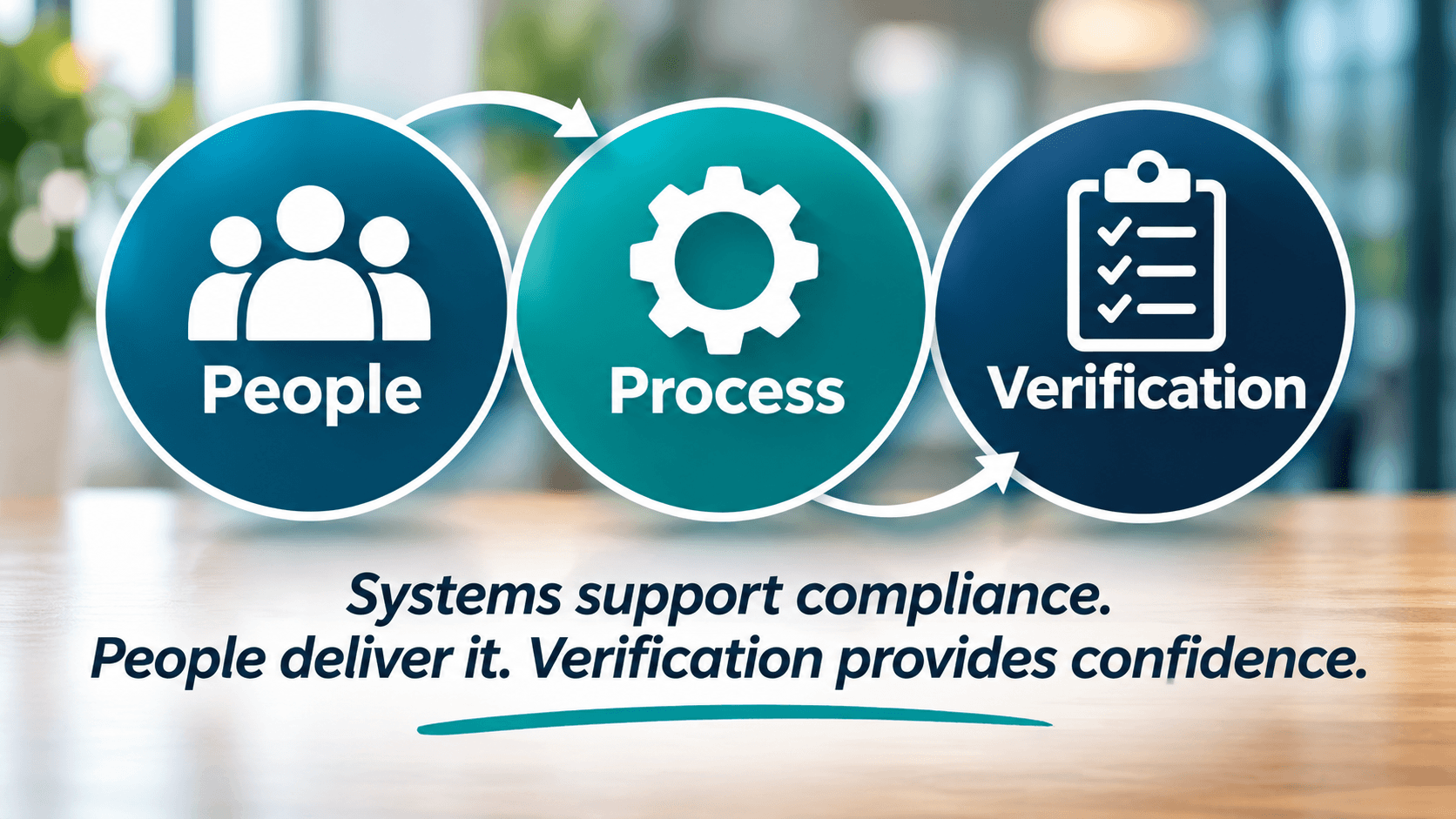
Compliance system implementation is about more than purchasing software or introducing procedures. It requires accurate information, clearly defined responsibilities, effective processes and regular verification to ensure that an organisation’s compliance requirements are being met.
Your compliance management system is only as good as the information people put into it and the processes you have in place to verify it.
Earlier this week, I worked with a client who uses CIRT to manage their Work Health and Safety (WHS) and ISO certification requirements.
The organisation also uses a separate employment and rostering system, which works well for its operational needs.
As part of their employee onboarding process, the finance team is responsible for entering new employees into both systems.
In theory, this works well. However, during our visit, we identified that some employee records within their employment system were incomplete and, in several instances, employees had not been entered into CIRT at all.
As a result, some employees may have been missing important training, workplace orientation and ongoing compliance activities.
This wasn’t necessarily a failure of either software system. It highlighted a weakness in the organisation’s implementation and verification processes.
Why Compliance System Implementation Requires More Than Technology
We have all heard the saying, “Garbage in, garbage out.”
When I was in the police, the same thing applied to intelligence. Quality information helped identify offenders; gossip didn’t help at all.
No matter how sophisticated your employment, rostering or compliance system is, its effectiveness depends on the accuracy and completeness of the information entered.
More importantly, the people responsible for entering that information need to understand why it is important and the consequences for the organisation if it is not entered correctly.
Adding an employee to a compliance system is not simply an administrative task. It is an important step in ensuring that the organisation can manage and monitor that employee’s compliance requirements.
These may include:
- Workplace inductions and orientation.
- Mandatory training and refresher training.
- Qualifications, licences and competencies.
- Relevant policies and procedures.
- Scheduled compliance activities.
- Records demonstrating that activities have been completed.
If an employee is not registered in the system, management may not even be aware that these activities are being missed.
This is why effective compliance system implementation requires more than technology. It also requires clear processes, employee accountability and ongoing monitoring.
Compliance Monitoring: Don’t Assume, Verify
One of the questions I encourage business owners and senior managers to ask themselves is:
How do I know that the processes we have established are being followed?
Having a procedure that requires an employee to be entered into two systems is one thing. Verifying that it has occurred is another.
A simple monthly reconciliation of active employee records across both systems could identify gaps before they become more significant compliance issues.
However, it is equally important to establish clear responsibilities for who enters the information, who verifies it and who follows up on incomplete activities.
This is not about blaming the administration or finance team.
It is about helping everyone understand their contribution to the organisation’s compliance responsibilities.
Effective compliance monitoring should be built into everyday business operations rather than treated as something that only happens when an audit or review is approaching.
Why Effective Compliance System Implementation Matters
Effective compliance system implementation requires more than having the right software. Businesses need to establish processes that ensure compliance activities are completed, employee information is accurate and management can identify outstanding requirements.
A well-implemented compliance management system should help organisations:
- Maintain accurate and up-to-date employee records.
- Monitor mandatory training and refresher requirements.
- Track workplace inductions, licences and qualifications.
- Identify outstanding compliance activities.
- Assign responsibilities to managers and supervisors.
- Monitor corrective actions and opportunities for improvement.
- Maintain evidence of compliance for audits and independent reviews.
For small-to-medium businesses and registered clubs, having a structured approach to compliance system implementation can make it easier to manage workplace risks, meet applicable regulatory requirements and demonstrate that compliance processes are being followed.
However, the system must be regularly monitored and verified.
Without ongoing oversight, even the most sophisticated compliance software may fail to deliver the intended results.
Why We Developed CIRT for Compliance Management
When we developed CIRT, our objective was to make compliance simpler and more manageable for small-to-medium businesses and registered clubs.
At CHD Partners, we work with organisations to develop their WHS, AML/CTF and ISO management systems. This also includes developing relevant procedures, providing practical tools and guiding management on what needs to be done.
However, we also recognise that providing a compliance system is only part of the solution.
The real challenge for many organisations is finding the time, resources and internal expertise to implement and maintain it consistently.
A compliance management system should not simply become another administrative responsibility. It should provide management with visibility over outstanding activities, employee requirements, workplace risks and opportunities for improvement.
You can learn more about the CIRT compliance management system and how it helps organisations manage their compliance requirements.
Ongoing Compliance Management Support for Businesses
We recognise that many small-to-medium businesses and registered clubs cannot justify a full-time or even part-time compliance person.
Through our monthly management support service, we work remotely with your management team to help:
- Monitor the implementation of your compliance system.
- Review outstanding compliance activities.
- Identify gaps in employee records and training.
- Establish clear responsibilities for managers and supervisors.
- Support supervisors in coaching and mentoring employees.
- Monitor corrective actions and opportunities for improvement.
- Build evidence that your management system is being implemented.
Our role is not to take away the employer’s responsibilities, but to provide the guidance, structure and ongoing support needed to help management fulfil those responsibilities.
This ongoing support helps businesses maintain their compliance management systems, address gaps and ensure that established processes continue to be followed.
For organisations without dedicated compliance personnel, having access to experienced compliance support can make a significant difference.
Building an Effective Compliance Management System: People, Processes and Technology
Technology provides the tools.
Processes establish what needs to be done.
People make it happen.
Verification provides confidence that it has happened.
All four are essential to an effective management system.
At CHD Partners, we don’t simply want to provide organisations with another software system.
We want to help them implement and maintain their compliance systems successfully.
Because ultimately, the value of a management system is not measured by the information it could hold, but by how effectively it is being used to manage risk, protect people and support the organisation.
Don’t just invest in a compliance system. Invest in its implementation.
If your organisation is struggling to maintain its WHS, AML/CTF or ISO management system, CHD Partners and CIRT are here to help.
Successful compliance system implementation requires the right combination of technology, processes, people and ongoing management support.
CHD Partners helps small-to-medium businesses and registered clubs implement, monitor and maintain their WHS, AML/CTF and ISO management systems through practical compliance support.
Whether you need help implementing a compliance management system or ensuring your existing processes are being followed, our team can help you build a more effective and manageable approach to compliance.
Contact CHD Partners to discuss your compliance management needs.
Visit www.chdpartners.com.au or www.cirt.net.au to learn more about our ongoing compliance management support services.
