

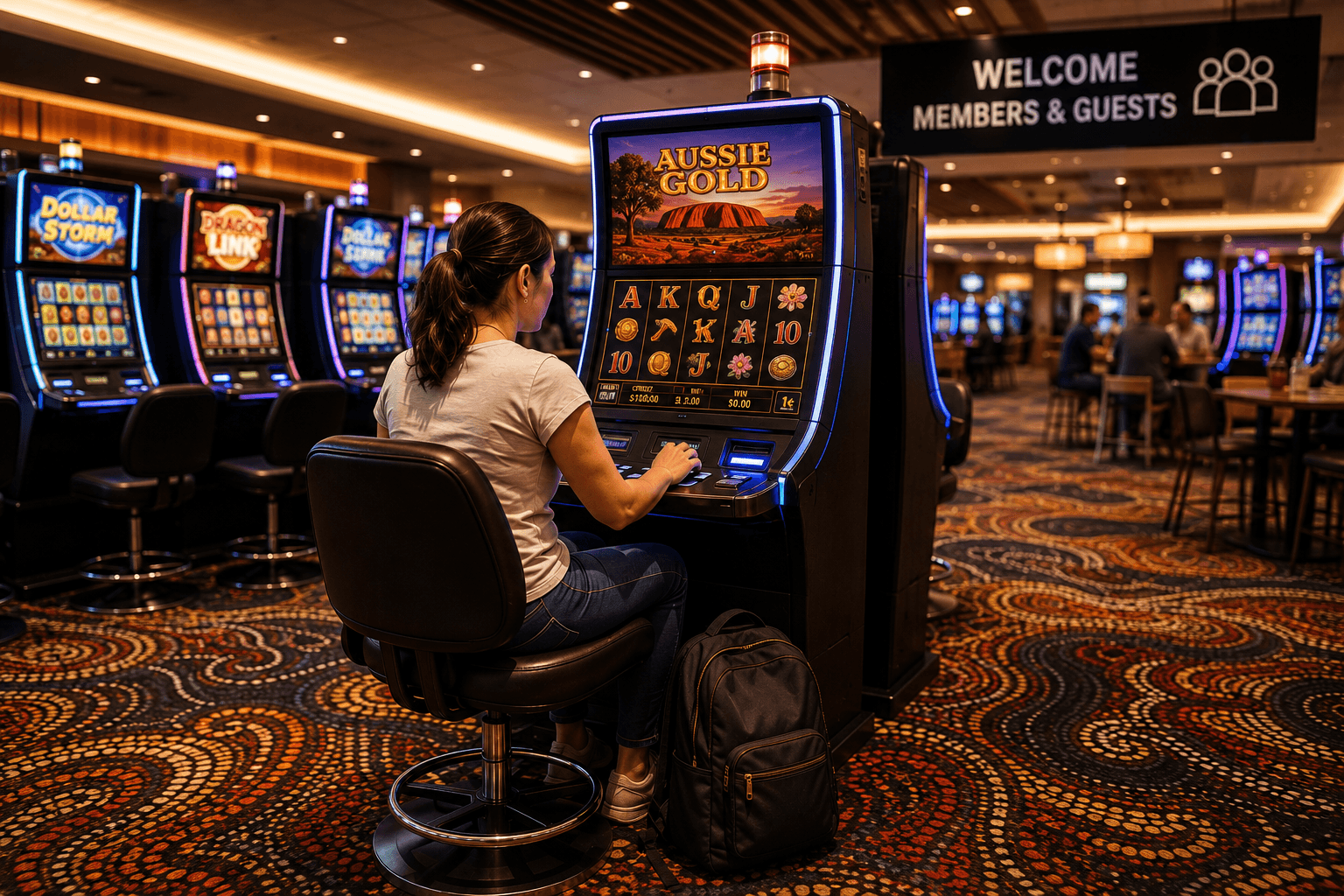
Money laundering risk in licensed venues is becoming an increasing concern for clubs, hotels, and gaming venues operating in areas with high customer turnover. Venues located in tourist destinations, mining regions, entertainment precincts, and transport hubs often experience greater AML/CTF compliance challenges due to transient populations and limited customer familiarity.
Licensed venues such as registered clubs and hotels are an important part of many communities. They provide entertainment, dining, social connection, and gaming facilities for both locals and visitors.
However, venues located in areas with large transient populations can face a higher risk of money laundering and other suspicious financial activity.
A transient population refers to people who are only in an area temporarily or who regularly move between locations. This may include:
- Tourists and holidaymakers
- Fly-in fly-out (FIFO) workers
- Seasonal workers
- Contractors
- Interstate travellers
- Event visitors
- Temporary residents
While most customers are legitimate patrons, transient populations can create additional AML/CTF risks because venues may have limited knowledge of who the customer is or whether their behaviour is unusual.
Why Money Laundering Risk in Licensed Venues Increases
One of the strongest controls in a local club environment is familiarity.
In many suburban and regional venues, staff often know regular patrons, understand normal customer behaviour, and can quickly identify when something does not seem right.
When a venue has a high number of transient customers, that familiarity reduces significantly. This can increase money laundering risk in licensed venues because staff may find it harder to identify suspicious behaviour patterns.
This can make it easier for criminals to:
- Move cash through gaming machines
- Conduct multiple small transactions
- Avoid attention by moving between venues
- Use busy periods to reduce scrutiny
- Hide suspicious behaviour amongst legitimate customer activity
Understanding money laundering risk in licensed venues is critical for clubs, hotels, and gaming operators operating in high-turnover environments.
Common Examples in Licensed Venues
Holiday and Tourist Areas
Clubs located near beaches, tourist destinations, or major attractions often experience large increases in patron numbers during holidays and long weekends.
During these periods, staff may see:
- Large cash buy-ins
- Customers cashing out after minimal gameplay
- Short-term customers visiting multiple times in a few days
- Reduced interaction with staff
Busy tourist environments can increase money laundering risk in licensed venues because customer familiarity is reduced and transaction activity may be harder to monitor effectively.
Mining and Industrial Towns
Regional towns with mining, infrastructure, or construction projects may experience a constant flow of temporary workers.
These workers may legitimately carry larger amounts of cash or spend heavily during roster breaks. However, the environment can also increase AML/CTF risk because:
- Customers are not well known to staff
- Transaction behaviour may vary significantly
- Large cash movement may appear “normal”
- Customers may move frequently between regions and venues
This means venues must rely on formal AML/CTF procedures rather than assumptions or familiarity.
Major City and Event Venues
Venues located in large metropolitan areas or near stadiums, entertainment precincts, or transport hubs often attract high customer turnover.
This can increase risk because:
- Customers may only visit once
- Staff have limited ability to monitor ongoing behaviour
- Overseas visitors may present additional country or geographic risk
- High transaction volumes can reduce visibility of unusual behaviour
Large event environments may significantly increase money laundering risk in licensed venues due to the volume and speed of customer transactions.
Behavioural Indicators of Money Laundering Risk in Licensed Venues
An important message for staff is that money laundering risk is often linked to behaviour, not appearance.
A customer may appear polite, well-dressed, and cooperative while still engaging in suspicious activity.
Staff should focus on behaviours such as:
- Minimal gameplay before cashing out
- Frequent cancelled credits
- Rapid cash-in and cash-out activity
- Multiple smaller redemptions
- Reluctance to provide identification
- Attempting to avoid cashier interaction
- Multiple visits over short periods involving similar behaviour
The Importance of Consistent Customer Due Diligence
In venues with transient populations, it is critical that staff consistently apply Customer Due Diligence (CDD) procedures.
This means:
- Following identification requirements every time
- Recording customer information correctly
- Conducting PEP and sanctions screening where required
- Escalating unusual activity to supervisors or compliance officers
- Monitoring customer behaviour over time where possible
Staff should never rely solely on comments such as:
“They look fine.”
“They’re only here for the weekend.”
“Someone else must know them.”
AML/CTF compliance requires documented processes and evidence-based decision-making.
Strong AML/CTF procedures help minimise money laundering risk in licensed venues with transient populations and high customer turnover.
To learn more about AML/CTF compliance requirements and training for licensed venues, visit CHD Partners’ AML/CTF resource page:
https://www.chdpartners.com.au/resources-page/anti-money-laundering-and-counter-terrorism-financing/
Licensed venues should also remain informed about broader Australian AML/CTF obligations and guidance provided by AUSTRAC: https://www.austrac.gov.au/
Managing Money Laundering Risk in Licensed Venues
Licensed venues can reduce the risk associated with transient populations by:
Strengthening Transaction Monitoring
Venues should increase monitoring during:
- Public holidays
- Major sporting or entertainment events
- Tourist seasons
- Local festivals or community events
Training Staff to Identify Behavioural Indicators
Frontline staff should understand:
- What suspicious activity looks like
- When to escalate concerns
- How to document observations properly
Using Consistent Processes
Venues should ensure:
- CDD procedures are followed consistently
- Records are maintained correctly
- Suspicious activity is reviewed promptly
- Monitoring systems are actively used
Supporting Staff and Supervisors
Management should reinforce that:
- AML/CTF compliance is everyone’s responsibility
- Staff should feel confident escalating concerns
- Following the process is more important than making assumptions about customers
A Risk-Based Approach to AML/CTF Compliance
Under Australian AML/CTF obligations, venues are expected to understand the risks associated with their customer base, location, and operating environment.
A venue located in:
- A tourist destination
- A mining region
- A transport corridor
- A metropolitan entertainment precinct
may require stronger monitoring controls than a venue with a smaller and more stable customer base.
The key is not to treat all customers as suspicious, but to recognise that transient environments can increase the risk of money laundering.
Final Message
Transient populations are not the problem themselves.
The risk comes from a reduced ability to identify normal customer behaviour and detect unusual activity.
Money laundering risk in licensed venues increases when staff are unable to rely on familiarity and must instead depend on consistent AML/CTF processes.
Money laundering risk in licensed venues is best managed through strong procedures, ongoing staff training, and effective transaction monitoring.
For licensed venues, the most effective control is consistency.
When staff consistently follow documented AML/CTF procedures, money laundering risk in licensed venues can be significantly reduced, helping organisations meet regulatory obligations and protect against financial crime exposure.
