
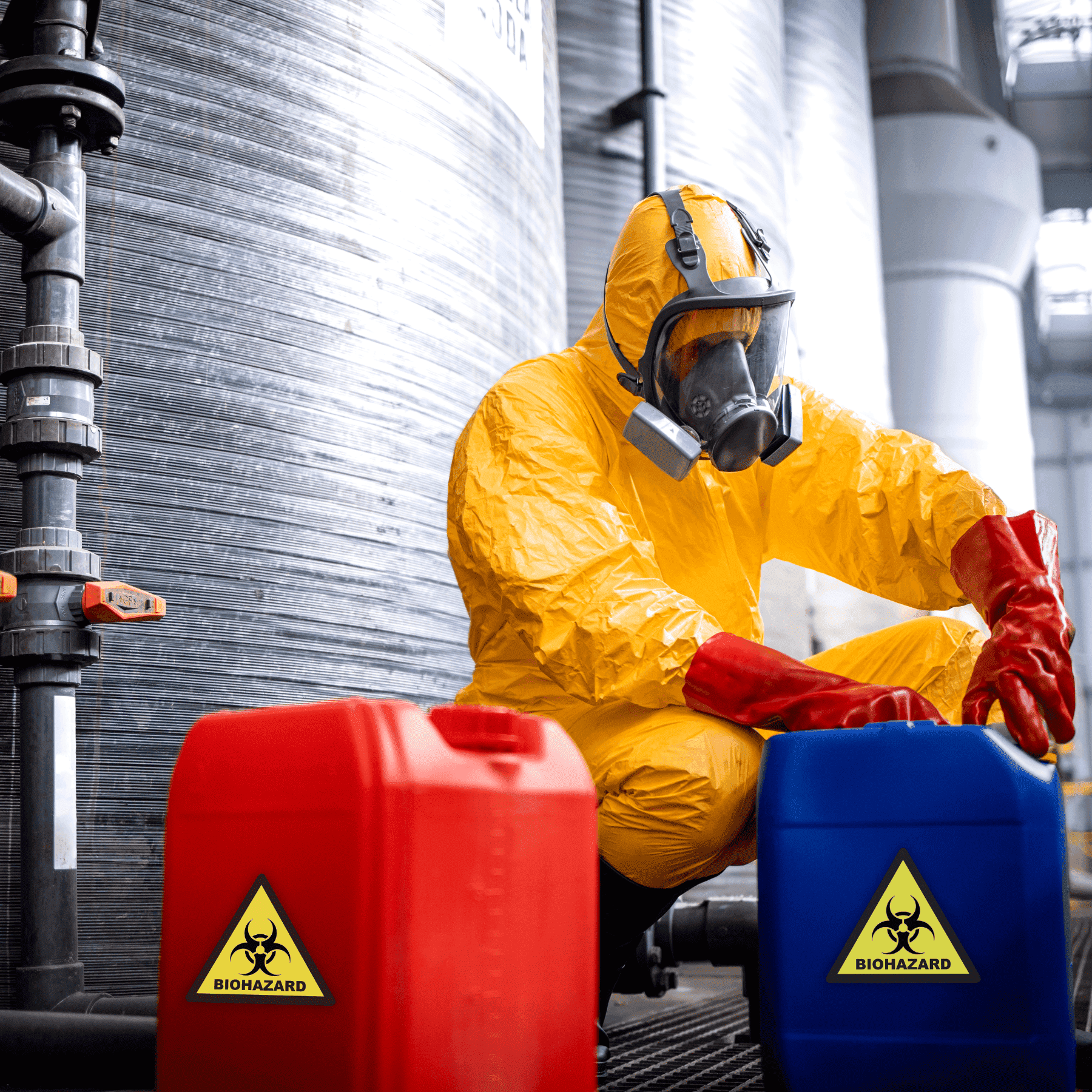
Many businesses use hazardous chemicals every day without fully understanding the risks or legal responsibilities involved. Cleaning products, fuels, paints, solvents, welding gases, pesticides, acids and even some printing products may all be classified as hazardous chemicals.
Whether you operate a workshop, café, warehouse, manufacturing business, transport company, club, hospitality venue or construction business, managing hazardous chemicals properly is essential for protecting workers, customers and the business itself.
Under Australian Work Health and Safety (WHS) legislation, businesses have a legal duty to manage the risks associated with hazardous chemicals.
Managing hazardous chemicals is a critical part of workplace safety and compliance for Australian businesses. Whether chemicals are used daily or only occasionally, businesses must have systems in place to identify hazards, control risks and protect workers from potential harm.
What Is a Hazardous Chemical?
A hazardous chemical is any substance, mixture or ingredient that can harm people, property or the environment.
Common examples include:
- Petrol and diesel
- Paints and thinners
- Cleaning chemicals
- LPG cylinders
- Acetylene and oxygen gases
- Pool chemicals
- Welding fumes
- Pesticides and herbicides
- Solvents and adhesives
- Corrosive acids
Hazardous chemicals can cause:
- Burns
- Poisoning
- Respiratory illness
- Fires and explosions
- Skin irritation
- Long-term health conditions
- Environmental damage
Why Hazardous Chemical Management Is Important
Many workplace incidents occur because businesses:
- Do not know what chemicals are onsite
- Fail to train workers
- Store chemicals incorrectly
- Do not maintain Safety Data Sheets (SDS)
- Mix incompatible chemicals
- Fail to provide proper ventilation or PPE
Even a small spill or exposure can result in:
- Serious worker injuries
- Environmental incidents
- Business interruption
- Insurance issues
- Regulatory penalties
- Prosecution under WHS laws
Good chemical management helps businesses:
- Protect workers
- Improve workplace safety
- Reduce incidents
- Demonstrate compliance
- Improve emergency preparedness
- Reduce financial risk
Effective managing hazardous chemicals practices help reduce workplace injuries, environmental incidents, business disruptions and compliance risks. A proactive approach also demonstrates a commitment to worker safety and responsible business operations.
Your Legal Responsibilities
Under the Australian WHS Regulations, businesses must:
- Identify hazardous chemicals in the workplace
- Maintain a hazardous chemicals register
- Keep current Safety Data Sheets (SDS)
- Assess risks associated with use, storage and handling
- Implement control measures
- Provide worker training and supervision
- Ensure correct labelling
- Prepare emergency procedures where required
The exact requirements may vary depending on the type and quantity of chemicals used.
Australian WHS laws place clear obligations on businesses regarding managing hazardous chemicals in the workplace. Failure to meet these obligations can result in enforcement action, penalties and increased risks to workers and the environment.
Step 1 – Identify Hazardous Chemicals
Start by identifying all chemicals used, handled or stored in the workplace.
This includes:
- Cleaning cupboards
- Workshops
- Vehicles
- Storage containers
- Fuel areas
- Plant and equipment
- Maintenance rooms
Do not assume products are safe simply because they are purchased from supermarkets or hardware stores.
If the product has:
- Hazard symbols
- Warning labels
- Signal words such as “Danger” or “Warning”
…it may be classified as hazardous.
Step 2 – Create a Hazardous Chemicals Register
A hazardous chemicals register is a list of all hazardous chemicals kept onsite.
The register should include:
- Product name
- Manufacturer
- Location of use or storage
- Current Safety Data Sheet (SDS)
This register must be accessible to workers and emergency services if required.
Many businesses now manage this electronically through online systems.
Step 3 – Maintain Safety Data Sheets (SDS)
An SDS provides important safety information about a chemical, including:
- Hazards
- Safe handling requirements
- PPE requirements
- Storage information
- First aid measures
- Spill response procedures
- Firefighting information
In Australia:
- SDS documents must be reviewed every 5 years
- Workers must have access to them
One of the most common compliance issues is outdated or missing SDS documents.
Step 4 – Conduct a Risk Assessment
Businesses must assess how workers may be exposed to hazardous chemicals.
Consider:
- How the chemical is used
- Frequency of use
- Quantity stored
- Ventilation
- Fire and explosion risks
- Exposure to fumes, dust or vapours
- Interaction with other chemicals
Questions to ask include:
- Could workers inhale fumes?
- Could chemicals contact skin or eyes?
- Could the chemical ignite?
- Could incompatible substances mix together?
Conducting a thorough risk assessment is one of the most important steps in managing hazardous chemicals safely. By identifying potential exposure risks and evaluating existing controls, businesses can make informed decisions about how to minimise hazards.
Step 5 – Implement Control Measures
Once risks are identified, businesses must implement controls to reduce risk so far as reasonably practicable.
Common controls include:
Elimination
Remove the hazardous chemical entirely if possible.
Substitution
Replace with a safer product.
Engineering Controls
Examples include:
- Ventilation systems
- Chemical storage cabinets
- Bunding
- Extraction systems
Administrative Controls
Examples include:
- Safe work procedures
- Training
- Signage
- Restricted access
- Spill response procedures
Personal Protective Equipment (PPE)
Examples include:
- Gloves
- Respirators
- Safety glasses
- Face shields
- Protective clothing
PPE should never be the only control where higher-level controls are possible.
Step 6 – Store Chemicals Correctly
Incorrect storage is a major cause of workplace incidents.
Businesses should ensure:
- Chemicals are labelled correctly
- Incompatible chemicals are separated
- Flammable liquids are stored appropriately
- Gas cylinders are secured
- Spill kits are available
- Storage areas are ventilated
- Emergency information signage is displayed where required
Never store chemicals in unlabelled containers.
Step 7 – Train Workers
Workers must understand:
- Chemical hazards
- Safe handling procedures
- PPE requirements
- Emergency procedures
- Spill response
- First aid measures
Training should be practical and easy to understand.
Importantly, businesses should also verify workers are competent – not just that training occurred.
Worker education and competency play a vital role in managing hazardous chemicals effectively. Employees should not only receive training but also demonstrate that they understand safe handling procedures and emergency response requirements.
Step 8 – Prepare for Emergencies
Emergency procedures should address:
- Chemical spills
- Fire or explosion
- Worker exposure
- Evacuation
- First aid response
Depending on the chemicals onsite, businesses may also require:
- Spill kits
- Eyewash stations
- Emergency showers
- Fire extinguishers
- Emergency plans
Workers should know exactly what to do during an incident.
Common Mistakes Small Businesses Make
Some of the most common issues seen in Australian workplaces include:
- No hazardous chemicals register
- Outdated SDS documents
- Unlabelled spray bottles
- Chemicals stored near ignition sources
- Workers not trained
- No spill response equipment
- Incorrect PPE
- Poor ventilation
- No documented risk assessments
Many businesses are surprised to discover they are non-compliant until an incident or inspection occurs.
Practical Tips for Small Businesses
Start Simple
Begin with your highest-risk chemicals first.
Conduct Workplace Inspections
Regularly inspect chemical storage and usage areas.
Review SDS Documents Annually
Even though SDS documents may last 5 years, annual reviews help identify changes.
Use Digital Systems
Online compliance systems can help manage:
- Chemical registers
- SDS documents
- Risk assessments
- Training records
- Inspections
- Incident reporting
Engage Workers
Workers often identify practical risks management may overlook.
Need Help Managing Hazardous Chemicals?
Many businesses require assistance with chemical registers, Safety Data Sheets (SDS), risk assessments, worker training and WHS compliance. If your organisation would like professional guidance on managing hazardous chemicals and improving workplace safety, contact CHD Partners to discuss your requirements and compliance obligations.
Frequently Asked Questions About Managing Hazardous Chemicals
What does managing hazardous chemicals involve?
Managing hazardous chemicals involves identifying chemical hazards, maintaining Safety Data Sheets (SDS), conducting risk assessments, implementing control measures, training workers and ensuring safe storage and handling practices.
Who is responsible for managing hazardous chemicals in the workplace?
Under Australian WHS legislation, employers and business owners have a duty to ensure hazardous chemicals are managed safely and that risks to workers are eliminated or minimised so far as reasonably practicable.
Why is managing hazardous chemicals important?
Managing hazardous chemicals helps prevent injuries, illnesses, fires, explosions, environmental damage and regulatory breaches while supporting a safer and more compliant workplace.
What documents are required for hazardous chemicals?
Businesses should maintain a hazardous chemicals register, current Safety Data Sheets (SDS), risk assessments, safe work procedures and relevant training records.
Final Thoughts
Managing hazardous chemicals does not need to be overly complicated, but it does require consistency and commitment.
Many small businesses focus heavily on production and customer service while unintentionally overlooking chemical risks that may seriously impact workers and the business.
By implementing simple systems, training workers and regularly reviewing chemical management processes, businesses can significantly reduce risk and improve compliance.
Hazardous chemical management is not just about paperwork—it is about protecting people.
Useful References
- Safe Work Australia – Hazardous Chemicals
- Safe Work Australia – Model Code of Practice: Managing Risks of Hazardous Chemicals in the Workplace
- SafeWork NSW – Hazardous Chemicals Information
