

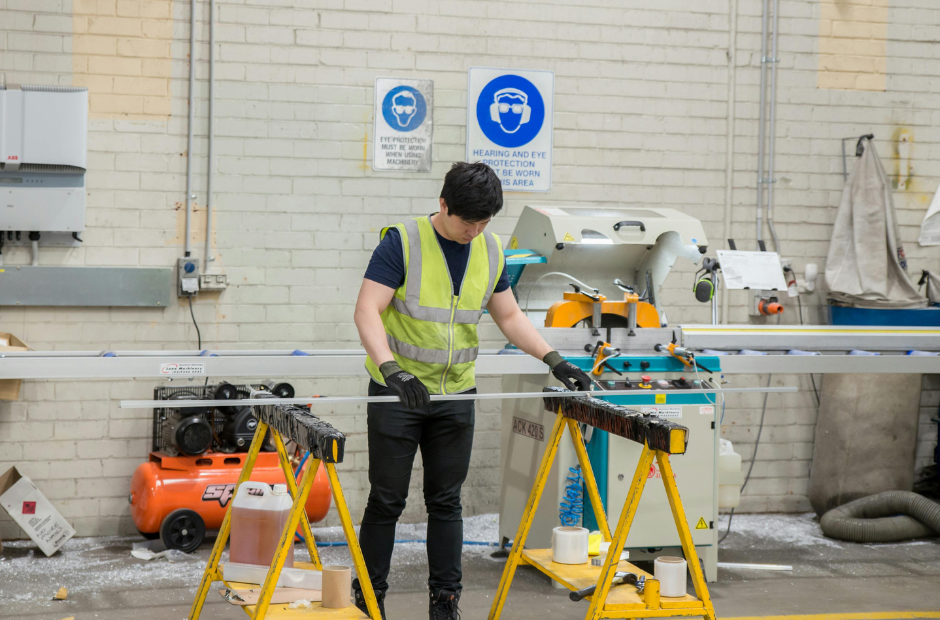
Most workplaces get this part right:
- They provide hearing protection
- They put up signage
- They tell workers to wear it
But here’s the problem…
Hearing protection only works if it’s fitted and used correctly — every time.
And in many workplaces, that’s where things fall apart.
Why Hearing Protection Matters More Than You Think
Under Safe Work Australia guidance, businesses must manage noise risks so far as is reasonably practicable.
That includes:
- Identifying hazardous noise (above 85 dB(A))
- Implementing controls
- Providing hearing protection where required
- Ensuring hearing protection is used correctly
You can learn more from Safe Work Australia here: Model Code of Practice: Managing noise and preventing hearing loss at work
But hearing loss doesn’t happen overnight.
It’s gradual.
It’s permanent.
And once it’s gone — it’s gone.
The Real Risk in Most Workplaces
It’s not usually that hearing protection isn’t available.
It’s things like:
- Earplugs not inserted properly
- Earmuffs sitting over hats or glasses with gaps
- Workers removing protection “just for a minute”
- Damaged or worn-out equipment still being used
These small issues completely reduce the effectiveness of the control.
A Simple Way to Get This Right
You don’t need a complicated system.
You need consistency, supervision, and simple checks.
Step 1: Make It Clear When It’s Required
Workers should never be guessing.
Ask yourself:
- Is there clear signage?
- Do workers know which areas require protection?
- Do supervisors reinforce the expectation?
If someone has to raise their voice to be heard, hearing protection is required.
Step 2: Focus on Fit (This Is the Big One)
Most failures come down to a poor fit.
Foam Earplugs
Workers should:
- Roll → Pull → Insert → Hold
- Ensure the plug is not sticking out
Earmuffs
Workers should:
- Create a full seal around the ear
- Avoid gaps caused by hair, glasses, or caps
If it’s not fitted properly, it won’t protect them.
Step 3: Set the Daily Rule
This is one of the simplest controls you can implement:
If you’re in a noisy area, hearing protection stays on.
Even removing protection for a short time significantly reduces protection across the shift.
Step 4: Check It Like Any Other Safety Control
Hearing protection should be part of your normal supervision:
- Include it in supervisor walks
- Spot check during shifts
- Address issues immediately
Not as a disciplinary action – but as a coaching moment
Step 5: Maintain the Equipment
It sounds basic, but it’s often missed:
- Replace disposable earplugs after use
- Clean reusable earplugs
- Check earmuff seals and headbands
- Remove damaged PPE from service
If it’s worn out, it won’t work.
A Practical Example
Instead of saying:
“Make sure you wear your hearing protection”
Try:
- Show workers how to fit it properly
- Watch them do it
- Correct it on the spot
- Reinforce it daily
That’s what changes behaviour.
Final Thought
Hearing protection is often treated as a simple safety control, but in reality, it only works when it is used correctly and consistently. Providing hearing protection is just the first step—making sure it is worn properly every time is what actually reduces risk. In many workplaces, the gap is not in having the right equipment, but in how it is used day to day, where small issues can quickly reduce its effectiveness.
That’s why the focus should always be on the basics: the right equipment, a proper fit, consistent use, and regular reinforcement from supervisors. These may seem like simple actions, but they play a critical role in ensuring hearing protection actually does what it is intended to do. Without this level of consistency, even the best equipment will fail to provide the protection workers need.
It’s also important to remember that hearing loss is gradual and permanent, and workers may not notice the damage until it is too late. For small to medium businesses, success doesn’t come from complex systems—it comes from doing the fundamentals well every single day. Because at the end of the day, hearing protection only works if it’s actually working in practice, not just in policy.
If you need support improving your workplace safety systems, you can reach out here: https://www.chdpartners.com.au/contact-us/
