

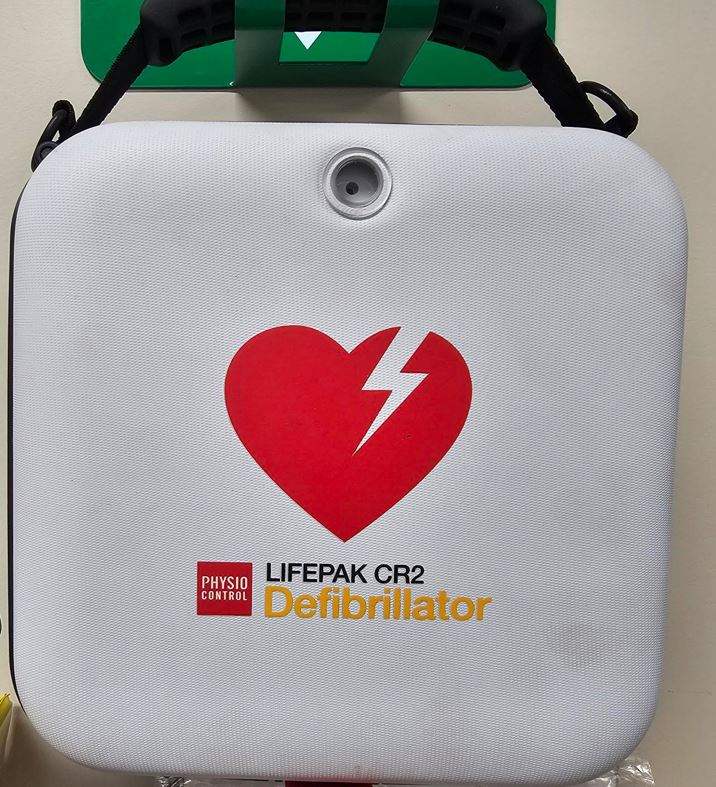
A Life-Saving Investment for Your People, Your Business, and Your Community
A workplace defibrillator is one of the most valuable investments an organisation can make to protect employees, contractors, customers, visitors and the wider community. While many employers focus on preventing slips, trips, falls, manual handling injuries and machinery incidents, sudden cardiac arrest is one of the most serious medical emergencies that can occur in any workplace.
Sudden cardiac arrest can affect anyone, regardless of age, fitness level or occupation. It can happen to employees, contractors, customers, visitors or members of the public. When it does, every minute counts.
Having a workplace defibrillator, also known as an Automated External Defibrillator (AED), readily available alongside trained first aiders and a well-planned emergency response can dramatically improve a person’s chances of survival before emergency services arrive.
What Is a Workplace Defibrillator?
A workplace defibrillator is a portable Automated External Defibrillator (AED) designed to analyse a person’s heart rhythm and, if required, deliver an electrical shock to help restore a normal heartbeat during sudden cardiac arrest.
Modern workplace defibrillators are designed for use by people with little or no medical experience. They provide clear voice and visual instructions throughout the rescue process and will only deliver a shock if one is needed, making them safe and easy to use in an emergency.
Why Every Workplace Defibrillator Matters During a Cardiac Emergency
When a person suffers sudden cardiac arrest:
- The heart stops pumping blood effectively.
- The brain begins to lose oxygen within minutes.
- Survival rates decrease by approximately 7–10% for every minute defibrillation is delayed.
- After around 10 minutes without treatment, survival becomes much less likely.
Early recognition, calling emergency services, immediate CPR and rapid use of a workplace defibrillator provide the best chance of survival. This sequence is commonly known as the Chain of Survival.
Benefits of Having a Workplace Defibrillator
Installing a workplace defibrillator demonstrates a proactive approach to workplace safety. Combined with CPR training and an effective emergency response plan, it can make the difference between life and death during a cardiac emergency.
It Can Save a Life
The most important benefit is simple—it may save someone’s life.
A workplace defibrillator can be used before ambulance officers arrive, giving the casualty the best possible chance of survival.
Protects Everyone on Site
A workplace defibrillator is not just for employees.
It may be used to assist:
- Customers
- Contractors
- Visitors
- Volunteers
- Delivery drivers
- Members of the public near your workplace
Every workplace becomes a potential community lifesaving location.
Supports Your First Aid Arrangements
Australian workplace first aid guidance encourages employers to consider whether an AED is appropriate as part of their first aid risk assessment.
Factors that may indicate an AED is suitable include:
- Large numbers of workers
- Older workforces
- Remote locations
- High-risk workplaces
- Public venues
- Sporting facilities
- Manufacturing sites
- Clubs and hospitality venues
- Shopping centres
- Schools and community organisations
An AED should form part of an overall emergency response system – not replace first aid training.
Demonstrates Genuine Care
Employees notice when an organisation invests in their wellbeing.
Providing an AED demonstrates that management is committed to protecting people, not simply complying with minimum legal requirements.
This helps build trust and contributes to a stronger workplace culture.
Supports Business Continuity
A serious medical emergency affects everyone.
Being prepared can:
- Reduce panic
- Improve emergency coordination
- Support faster emergency response
- Reduce disruption following an incident
Prepared workplaces recover more effectively from emergencies.
Gives First Aiders Greater Confidence
Many workplace first aiders worry about managing a cardiac emergency.
Knowing an AED is available provides additional confidence because the device guides the rescuer through every step of the process.
Combined with CPR training, it becomes an invaluable emergency response tool.
Do Staff Need Training?
Although anyone can use an AED, training significantly improves confidence.
Regular first aid and CPR training helps staff:
- Recognise cardiac arrest quickly.
- Begin CPR immediately.
- Retrieve the AED without delay.
- Follow the device prompts correctly.
- Work effectively as a team until paramedics arrive.
Regular practice also ensures emergency procedures remain effective.
Maintaining Your AED
Owning an AED is only part of the solution.
Organisations should ensure:
- Batteries are within expiry dates.
- Electrode pads are current.
- Routine inspections are completed.
- The unit remains easily accessible.
- Appropriate signage is installed.
- Staff know where it is located.
- The AED is included in emergency response procedures.
- Maintenance records are kept.
These simple checks help ensure the device is ready if it is ever needed.
Is an AED Required by Law?
Australian work health and safety legislation does not generally require every workplace to have an AED.
However, employers have a duty to eliminate or minimise risks so far as is reasonably practicable.
As part of a workplace first aid risk assessment, organisations should consider whether providing an AED is appropriate based on:
- Workplace hazards
- Number of workers
- Public access
- Distance from emergency medical services
- Medical history and workforce demographics
- Previous incidents
- Likelihood of a cardiac emergency
For many workplaces, particularly those with larger workforces or public access, an AED is a sensible and responsible investment.
Final Thoughts
You hope your workplace never needs a defibrillator.
But if someone experiences a sudden cardiac arrest, having an AED available could provide the precious minutes needed to save a life before paramedics arrive.
When combined with trained first aiders, effective emergency procedures and regular practice, an AED becomes much more than a piece of equipment—it becomes an important part of your organisation’s commitment to protecting people.
The question is not whether you will ever need it.
The question is whether you could afford not to have it when every second matters.
If you’re considering whether a workplace defibrillator is right for your organisation, contact CHD Partners to discuss your workplace safety and training needs. Our team can help you strengthen your emergency preparedness through practical WHS and first aid solutions. For more information about workplace defibrillator guidelines and recommendations in Australia, you can also read this helpful article from ETA Training.
