

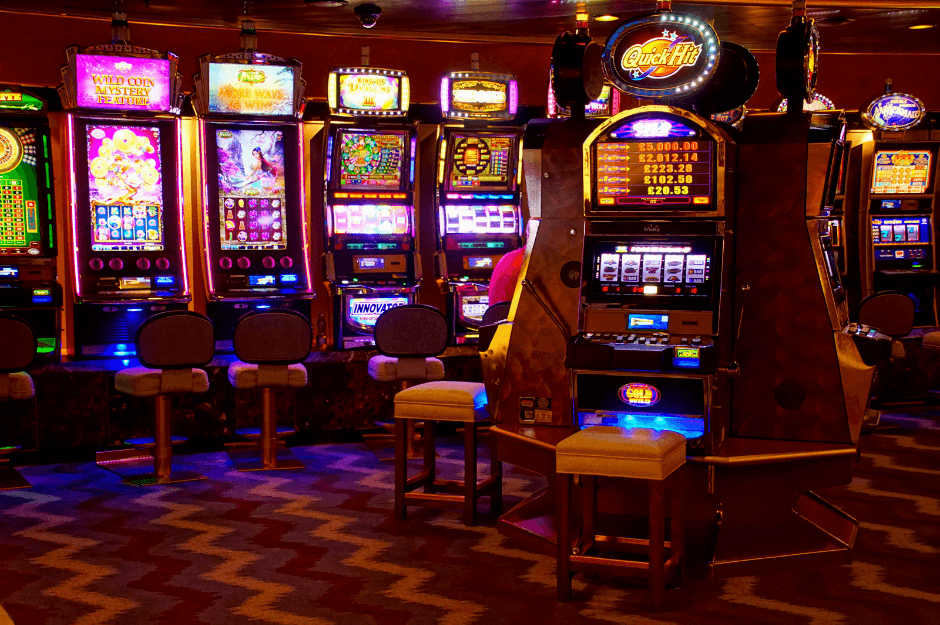
For registered clubs, effective Anti-Money Laundering and Counter-Terrorism Financing (AML/CTF) compliance starts with understanding the venue itself.
Every club is different.
A small regional club with a handful of gaming machines presents a different risk profile to a large metropolitan club operating multiple bars, restaurants, hundreds of gaming machines and significant cash transactions.
This is why the Venue Profile within CIRT is an important part of managing a club’s AML/CTF compliance.
Rather than treating AML/CTF compliance as a collection of policies and procedures, the Venue Profile provides a central picture of how the club operates, where its risks may arise and what controls should be in place.
What is the Venue Profile?
The Venue Profile is designed to capture important information about the club and its operating environment.
Depending on the venue, this may include information such as:
- venue locations and operating areas
- gaming operations and number of gaming machines
- cash handling activities
- membership and customer characteristics
- products and services offered
- transaction types and payment methods
- opening hours and operating patterns
- geographic considerations
- customer demographics
- higher-risk activities or customer groups
- relevant systems and technology
- management and compliance responsibilities
- existing AML/CTF controls.
The purpose is not simply to collect information.
The real value comes from using that information to help the club understand its money laundering, terrorism financing and proliferation financing risks.
It Provides Context for the Club’s Risk Assessment
An AML/CTF risk assessment should not be generic.
The club needs to consider the risks associated with its own customers, designated services, delivery channels, geographic exposure and other relevant factors.
The Venue Profile provides much of the operational information needed to make that assessment meaningful.
For example, consider two clubs.
Club A operates 12 gaming machines, has predominantly local members and relatively low levels of cash activity.
Club B operates 250 gaming machines, trades extended hours, has substantial cash transactions and attracts customers from a much wider geographic area.
Both may provide similar designated services, but their exposure to money laundering and other financial crime risks may be quite different.
The Venue Profile helps provide the context necessary to identify those differences.
It Helps Connect Compliance to What Actually Happens in the Club
One of the challenges with AML/CTF programs is ensuring that the written program reflects actual operations.
A club’s circumstances can change.
It may:
- increase or reduce gaming machine numbers
- introduce new technology
- change payment methods
- renovate or expand gaming areas
- acquire another venue
- change its operating hours
- introduce new products or services
- experience changes in customer behaviour
- identify new financial crime risks.
If the club’s AML/CTF documentation does not change with the business, a gap can develop between what the program says happens and what actually happens.
Maintaining the Venue Profile provides a practical reference point for reviewing these changes.
It Supports the AML/CTF Compliance Officer
The AML/CTF Compliance Officer needs visibility over the club’s operations to effectively oversee compliance.
The Venue Profile gives the Compliance Officer a structured starting point.
Rather than having important information spread across different departments, spreadsheets, emails and people’s knowledge, relevant venue information can be maintained in one place.
This can help the Compliance Officer when:
- reviewing the AML/CTF risk assessment
- reviewing transaction monitoring arrangements
- assessing customer due diligence controls
- considering emerging risks
- preparing management or Board reports
- reviewing incidents and suspicious activity
- preparing for an independent review
- responding to AUSTRAC enquiries.
It becomes particularly valuable when a new Compliance Officer takes over the role because they have a documented picture of the venue rather than relying entirely on corporate knowledge held by previous employees.
It Helps Identify Changes in Risk
AML/CTF risk management should not be a “set and forget” exercise.
Changes to the club can potentially change its AML/CTF risk.
For example:
A club increases its gaming machine numbers and introduces longer trading hours.
That may affect transaction volumes, staffing, supervision, cash handling and transaction monitoring requirements.
The question should therefore be:
Does this change affect our AML/CTF risk or the controls we have established?
A regularly reviewed Venue Profile can help management recognise when operational changes should trigger a review of the club’s risk assessment or AML/CTF controls.
It Supports Board and Senior Management Oversight
Boards and senior management need sufficient information to properly oversee the club’s AML/CTF arrangements.
A well-maintained Venue Profile helps explain the environment in which the AML/CTF Program operates.
Instead of simply presenting the Board with a large compliance document, management can demonstrate the connection between:
Our Venue → Our Risks → Our Controls → Our Monitoring
For example:
Venue characteristic: High number of gaming machines and significant cash activity.
Potential risk: Increased opportunity for customers to attempt to convert cash through gaming activity.
Controls: Customer due diligence, transaction monitoring, staff observations, identification requirements and escalation procedures.
Monitoring: Transaction reports, suspicious behaviour reports, CDD records and Compliance Officer review.
This makes AML/CTF governance easier for directors and senior managers to understand.
It Provides Evidence
Good compliance is not simply about having policies.
A club should also be able to demonstrate how it has considered its risks and why particular controls have been implemented.
The Venue Profile contributes to that evidence.
When combined with other information maintained through CIRT – including the AML/CTF risk assessment, customer due diligence records, transaction monitoring, incident reporting, training records and compliance reporting – the club can build a clearer evidence trail.
This can be particularly useful during an independent review or when responding to questions from AUSTRAC.
Instead of saying:
“We believe our controls are appropriate.”
The club is better positioned to demonstrate:
“These are the characteristics of our venue, these are the risks we identified, these are the controls we implemented, and this is how we monitor whether those controls are working.”
That is a much stronger compliance position.
It Helps Create Consistency Across Multiple Venues
The Venue Profile can also be valuable for organisations operating more than one club.
Two venues operated by the same organisation should not automatically be assumed to have identical AML/CTF risks.
One venue may have significantly more gaming machines, different customers, different transaction patterns or different geographic considerations.
Maintaining individual Venue Profiles allows management to identify those differences while still applying the organisation’s broader AML/CTF framework consistently.
This provides both standardisation and venue-specific risk management.
Making the Venue Profile Part of the Compliance Cycle
The Venue Profile should not be something completed once and forgotten.
Clubs should consider reviewing it:
- as part of their scheduled AML/CTF risk assessment review
- when significant operational changes occur
- when new products, services or technology are introduced
- when acquiring or opening another venue
- following significant AML/CTF incidents
- where emerging risks are identified
- when preparing for an independent review.
The important principle is simple:
If the venue changes, consider whether the AML/CTF risk has changed.
CIRT: Connecting the Pieces
The value of CIRT is not simply storing AML/CTF documents.
It is about connecting the different parts of the club’s compliance framework.
The Venue Profile helps establish the foundation:
Venue Profile → Risk Assessment → AML/CTF Controls → Operational Reporting → Compliance Officer Oversight → Board Reporting → Review and Improvement
This helps move AML/CTF compliance away from being a document that sits in a folder and towards being an active management system.
Compliance Starts With Understanding Your Venue
A club cannot effectively manage a risk it does not understand.
The Venue Profile provides a practical way of documenting the club’s operating environment and using that information to support its AML/CTF risk management framework.
For Compliance Officers, senior managers and Boards, it provides something particularly valuable – context.
It helps answer three fundamental questions:
What does our venue look like?
Where could our AML/CTF risks arise?
Are the controls we have in place appropriate for those risks?
When those questions can be answered clearly – and supported with evidence – AML/CTF compliance becomes much easier to understand, manage and demonstrate.
If your club needs support reviewing its AML/CTF framework, risk profile or compliance processes, contact CHD Partners to discuss how we can help.
