

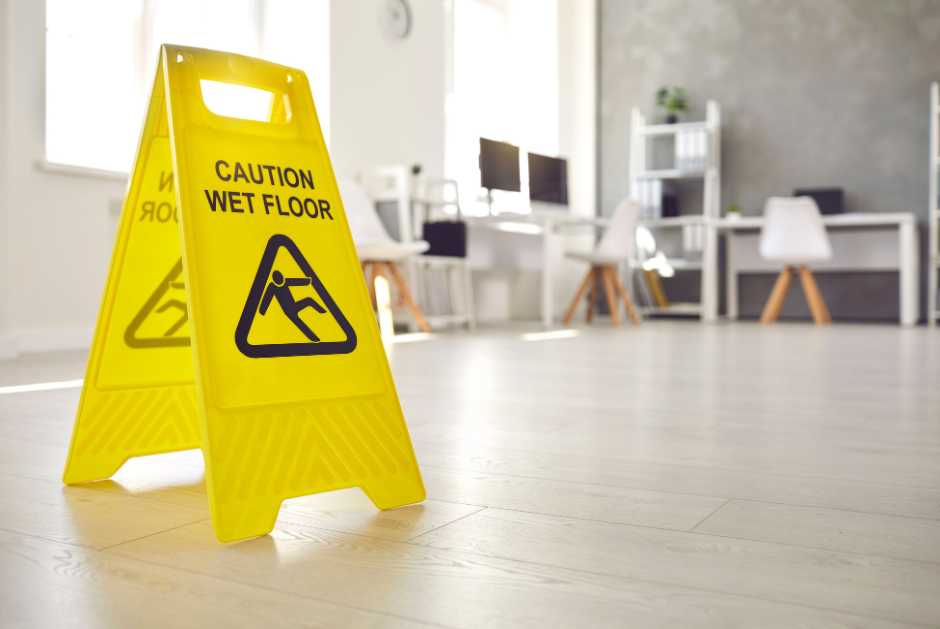
A practical slips, trips and falls risk assessment can help protect your workers, customers and business while providing evidence that workplace health and safety (WHS) obligations are being addressed.
Slips, trips and falls are among the most common workplace incidents. They can happen in almost any business, whether it is a registered club, hospitality venue, office, retail store, warehouse or workshop.
A wet floor near an entrance, a loose mat, a damaged pathway or poorly lit stairs might seem like minor issues. However, these workplace hazards can cause serious injuries, lost work time, workers’ compensation claims and significant disruption to business operations.
For business owners and managers, the question is simple:
When did you last complete a slips, trips and falls risk assessment in your workplace?
Why Is a Slips, Trips and Falls Risk Assessment Important?
On 29 September 2026, Safe Work Australia published its Guide to Managing the Risks of Slips, Trips and Falls, providing practical advice to help businesses identify hazards, assess risks and implement effective control measures.
This guidance is particularly relevant to small and medium businesses where supervisors are often responsible for identifying and managing workplace hazards during everyday operations.
In NSW, legislative changes introduced on 1 July 2026 also strengthened the requirements relating to approved Codes of Practice.
Under section 26A of the Work Health and Safety Act 2011, businesses must comply with relevant approved Codes of Practice or adopt alternative measures that provide an equivalent or higher standard of safety.
The Managing the Risk of Falls at Workplaces Code of Practice primarily addresses falls from one level to another. Other approved Codes, including those addressing workplace risk management and work environments, may also be relevant.
For business owners and WHS managers, these developments make it important to review existing workplace risk assessments and ensure that selected control measures are suitable and effective.
Common Slips, Trips and Falls Hazards in the Workplace
A comprehensive slips, trips and falls risk assessment should consider all areas where workers, contractors and customers may be exposed to hazards.
Some common workplace slip, trip and fall hazards include:
- Wet and slippery floors: Spills, cleaning activities, grease, condensation and rainwater entering buildings.
- Uneven surfaces: Damaged tiles, loose carpet, potholes and changes in floor levels.
- Stairs and ramps: Slippery surfaces, damaged stair edges, inadequate handrails and poor lighting.
- External areas: Car parks, footpaths, loading areas and outdoor walkways affected by weather conditions.
- Poor housekeeping: Trailing electrical cables, equipment, stock and other objects obstructing walkways.
- Working at heights: Unsafe ladder use, unprotected edges, mezzanines and elevated work platforms.
- Work organisation: Fatigue, rushing, carrying loads and inadequate staffing arrangements.
The challenge is not simply recognising these hazards. Businesses need to determine whether existing controls adequately manage the risks.
A workplace risk assessment should also consider how work activities, environmental conditions and organisational arrangements contribute to the likelihood of slips, trips and falls.
Workplace Inspection vs Risk Assessment: Understanding the Difference
Many organisations conduct workplace inspections using a checklist.
This is an important safety activity, but a workplace inspection and a risk assessment serve different purposes.
A workplace inspection identifies hazards and checks whether existing controls are working.
A risk assessment considers how someone could be injured, the likelihood and potential consequences, and the control measures required to eliminate or minimise the risk.
For example, a workplace inspection might identify a slippery tiled entrance during wet weather.
A proper slips, trips and falls risk assessment should go further by considering:
- Who could be injured, including workers, contractors and customers?
- When and why does the floor become slippery?
- Are the current floor surfaces suitable for wet conditions?
- Can the hazard be eliminated or controlled through improvements to flooring, drainage or entrance design?
- Are temporary controls needed until permanent improvements can be implemented?
- Who is responsible for implementing and checking the controls?
A warning sign may alert people to a hazard, but it does not remove the slippery surface.
Businesses should apply the hierarchy of controls and prioritise more effective measures wherever reasonably practicable.
Introducing the CHD Partners Slips, Trips and Falls Risk Assessment
To assist small and medium businesses, CHD Partners has developed a practical Slips, Trips and Falls Workplace Risk Assessment, drawing on Australian WHS legislation, approved Codes of Practice and Safe Work Australia guidance.
This workplace risk assessment provides a structured approach to identifying common hazards, evaluating potential risks and considering appropriate control measures.
The assessment includes:
- 36 common hazard scenarios: Covering internal and external work environments, access equipment and organisational factors.
- Recommended risk controls: Helping supervisors and WHS managers select suitable measures to address identified hazards.
- Risk-rating framework: Helping businesses prioritise hazards requiring attention.
- 43-question workplace inspection checklist: Supporting ongoing monitoring and identification of workplace hazards.
- Corrective-action register: Helping allocate responsibilities, record actions and verify completion.
The assessment can be tailored to different workplaces, including registered clubs, hospitality venues, retail businesses, offices and industrial workplaces.
It is intended to be completed and verified against each workplace’s actual conditions, with workers consulted as part of the process.
Using a structured slips, trips and falls risk assessment can help businesses establish a consistent approach to identifying hazards, implementing controls and monitoring workplace safety.
Five Practical Slips, Trips and Falls Prevention Actions for Supervisors
Managing slips, trips and falls does not need to be complicated. Supervisors and WHS managers can take several practical steps to reduce workplace risks.
1. Walk Through Your Workplace
Inspect internal floors, entrances, stairs, external pathways and operational areas. Consider different working conditions, including wet weather, cleaning activities and busy periods.
2. Consult Your Workers
Ask employees where they have noticed slippery surfaces, near misses or recurring problems. Workers often identify hazards that are missed during formal inspections.
3. Complete or Review Your Risk Assessment
Identify slip, trip and fall hazards, assess the potential consequences and determine whether current control measures are sufficient. Review your workplace risk assessment whenever conditions or work activities change.
4. Implement and Record Corrective Actions
Allocate responsibilities, set completion timeframes and keep evidence of repairs, improvements and other control measures implemented.
5. Monitor and Review Workplace Safety
Incorporate slip, trip and fall checks into routine workplace inspections, supervisor safety walks and incident reviews. Regular monitoring helps determine whether existing controls remain effective.
These activities help businesses move from simply identifying hazards to demonstrating that workplace risks are being actively managed.
Workplace Risk Assessment Documentation: Why Evidence Matters
Having a completed slips, trips and falls risk assessment is a valuable starting point.
However, businesses should also be able to demonstrate that workers understand the hazards, control measures have been implemented, inspections are being completed and identified problems are being resolved.
For example, where an inspection identifies a damaged external pathway, the business should:
- Record the identified hazard.
- Implement appropriate interim control measures.
- Arrange the necessary repairs.
- Allocate responsibility for completing the corrective action.
- Verify that the pathway is safe before normal access resumes.
Maintaining these records can help demonstrate that the business is taking practical steps to meet its WHS obligations.
A documented workplace risk assessment, supported by regular inspections and corrective-action records, also provides supervisors and managers with a clearer understanding of outstanding safety issues.
Is Your Business Ready for a Slips, Trips and Falls Risk Assessment?
Slips, trips and falls can occur during routine activities, often in areas that workers and customers use every day.
A practical slips, trips and falls risk assessment can help businesses identify overlooked hazards, improve workplace safety and establish a documented approach to managing risks.
CHD Partners has developed a Slips, Trips and Falls Risk Assessment and Workplace Inspection Checklist to assist small and medium businesses in identifying hazards, reviewing control measures and improving their WHS management systems.
If your business needs a structured approach to workplace safety and risk management, contact CHD Partners to learn more about the assessment and how it can be incorporated into your existing WHS management system.
CHD Partners – Practical Compliance Solutions for Small and Medium Businesses
