

Safety data provides one of the clearest indicators of how well your workplace is managing risk. Many business owners believe that if no one has been seriously injured, everything must be running safely.
Unfortunately, that isn’t always true.
In most workplaces, serious incidents are preceded by warning signs that have either been ignored or simply not recognised. This is why every owner, CEO, manager and board should review their safety data every month—not just after someone gets hurt.
Good safety management isn’t about reacting to incidents. It’s about identifying trends early and acting before an injury occurs.
There are two types of safety data every organisation should monitor.
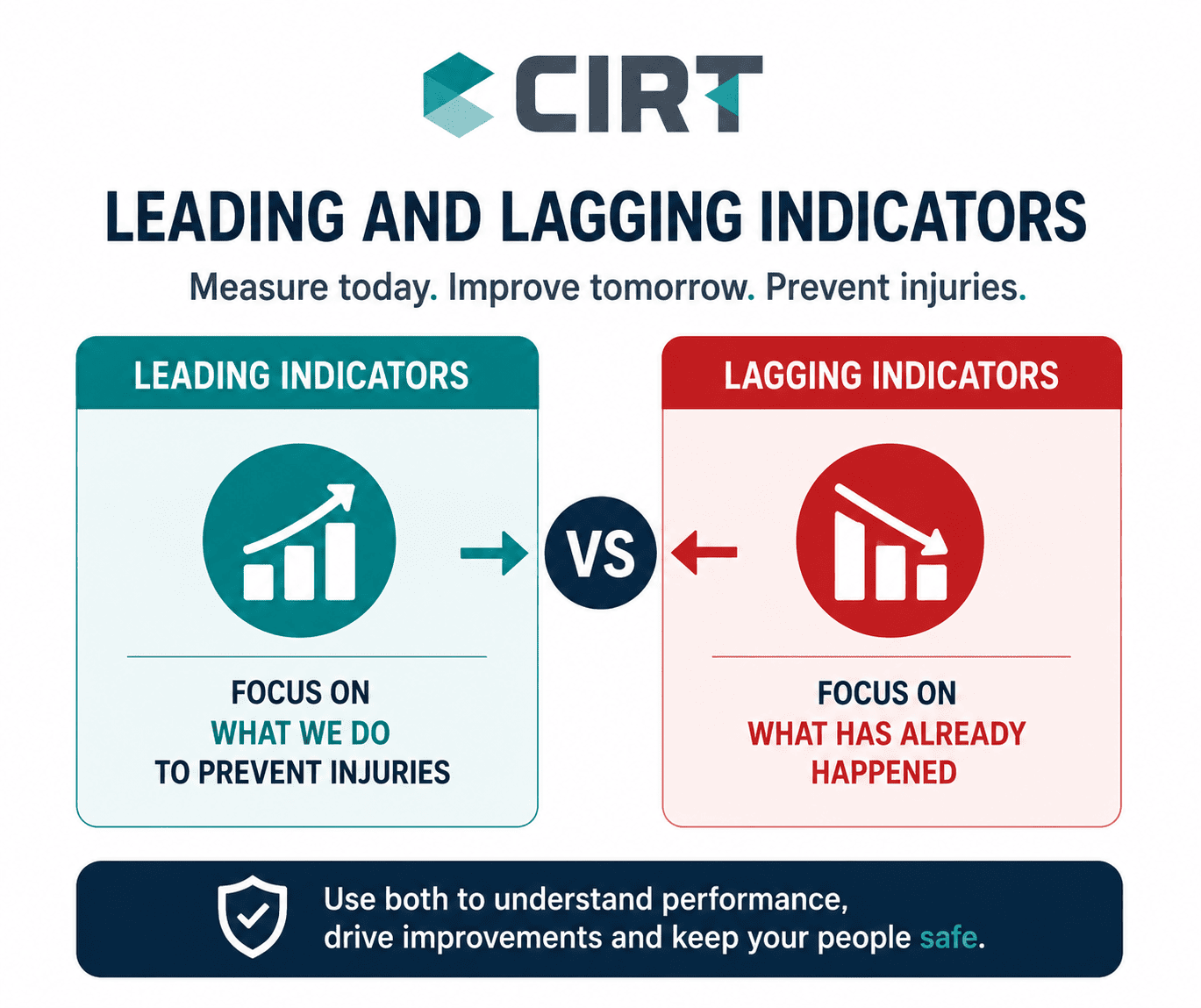
Lagging Indicators – Looking Back
Lagging indicators tell you what has already happened.
Examples include:
- Workplace injuries
- Near misses
- Incident reports
- Workers’ compensation claims
- Lost time injuries
- Property damage
These are important because they measure outcomes.
However, by the time these figures increase, someone has already been injured, or something has already gone wrong.
Think of lagging indicators as the rear-view mirror of your business.
Leading Indicators – Looking Ahead
Leading indicators provide an early warning that something may be developing before an injury occurs.
These include:
- Supervisor safety walks
- Workplace inspections
- Hazard reports
- Toolbox talks
- Safety observations
- Corrective actions completed
- Risk assessments
- Employee consultation
- Training completed
- Monthly safety tasks
These activities demonstrate that your organisation is actively managing risk rather than waiting for incidents to happen.
Think of leading indicators as the windscreen of your business—they help you see what’s coming.
What Safety Data Should Owners and Boards Review?
Every month, management should ask simple questions such as:
- Have incidents increased?
- Are the same hazards being reported repeatedly?
- Are supervisors completing their workplace inspections?
- Are toolbox talks being held?
- Are corrective actions being closed out?
- Which areas or sections are reporting hazards?
- Which areas or sections aren’t reporting anything at all?
- Are workers actively participating in safety?
Sometimes the biggest warning sign is silence.
If no hazards are being reported, it doesn’t necessarily mean the workplace is safe.
It may indicate that workers are not engaged, supervisors are not looking, or staff do not feel comfortable raising concerns.
Looking for Trends in Safety Data
One injury may simply be an accident.
Five similar injuries over three months indicate a trend.
Likewise, one hazard report may not mean much.
Twenty hazard reports about poor housekeeping, damaged equipment or manual handling tell you exactly where your next injury is likely to occur.
This is why reviewing safety data every month is so valuable.
It allows management to identify patterns before they lead to prosecutions, workers’ compensation claims, or serious injuries.
How Safety Data Demonstrates Due Diligence
For directors, officers and business owners, reviewing safety data each month is also part of demonstrating due diligence.
It shows that leadership is:
- Receiving information about health and safety.
- Monitoring workplace performance.
- Responding to identified risks.
- Providing resources where required.
- Verifying that safety systems are being implemented.
If SafeWork investigates your organisation after an incident, one of the questions often asked is:
“How did management know what was happening in the workplace?”
Monthly safety reports provide evidence that management was actively monitoring the organisation rather than simply assuming everything was under control.
Make Safety Data Simple
You don’t need complicated dashboards or hundreds of reports.
Most small to medium businesses can gain valuable insights from reviewing a simple monthly summary that includes:
- Number of incidents and injuries.
- Number of hazards reported.
- Supervisors’ walk completion.
- Toolbox talks completed.
- Outstanding corrective actions.
- Training completed.
- High-risk issues requiring management attention.
Reviewing safety data takes only a few minutes each month but can prevent significant financial, legal and human consequences.
Prevention Is Always Better Than Investigation
The most successful organisations don’t wait for injuries before paying attention to safety.
They continually monitor what is happening in their workplace, encourage workers to report hazards, and support supervisors to identify risks before someone gets hurt.
By combining lagging indicators such as incident and injury reports with leading indicators like supervisor walks, toolbox talks and hazard reporting, business owners gain a much clearer picture of the health of their safety culture. Safe Work Australia also encourages organisations to proactively identify and manage workplace risks as part of an effective WHS system.
Because in work health and safety, the goal isn’t simply to count injuries.
It’s to prevent them from happening in the first place.
Ready to Get More Value from Your Safety Data?
Reviewing safety data is only effective when you have the right systems in place to collect, monitor, and act on the information. At CHD Partners, we help organisations develop practical WHS systems that simplify compliance, strengthen safety performance, and provide the evidence needed for audits and inspections.
If you’d like to learn how CHD Partners and CIRT can help your organisation make better use of safety data and build a safer workplace, contact us today:
