

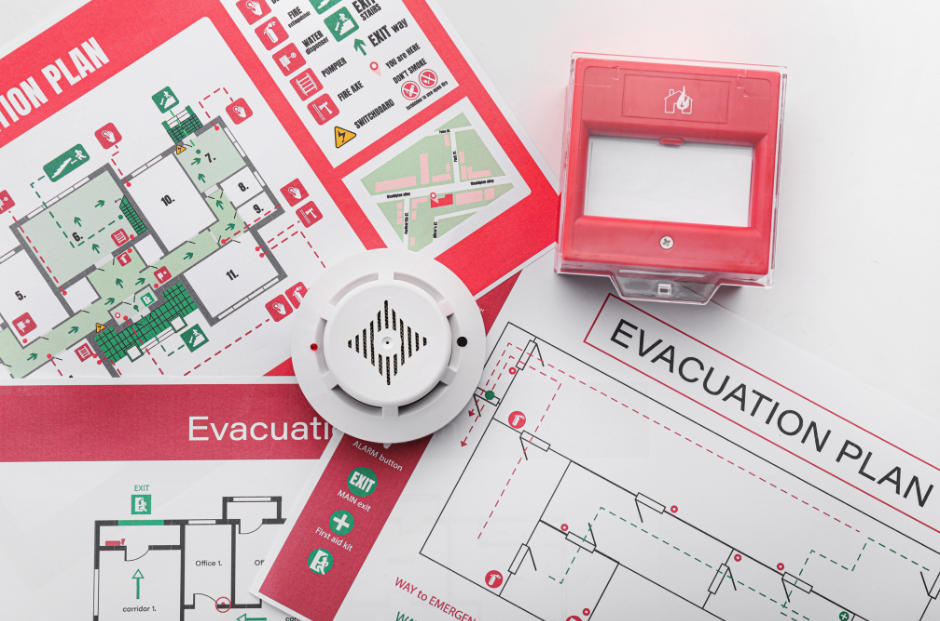
Most businesses have an emergency evacuation plan. They have exit signs, evacuation diagrams, fire extinguishers and an assembly point.
But there is another question every business should consider:
Can every worker and regular workplace occupant actually evacuate safely in an emergency?
For some people, following the normal evacuation procedure may not be enough. They may need additional assistance because of mobility, hearing, vision, medical, cognitive or other individual circumstances.
This is where a Personal Emergency Evacuation Plan (PEEP) can be important.
What is a Personal Emergency Evacuation Plan?
A Personal Emergency Evacuation Plan is an individual plan developed for a person who may require assistance to respond to or safely evacuate from the workplace during an emergency.
A Personal Emergency Evacuation Plan supplements the organisation’s general emergency plan. It considers the person’s individual circumstances, the workplace and the practical assistance that may be required.
A PEEP may identify:
- The type of assistance the person may require
- How they will be alerted to an emergency
- The safest evacuation method or route
- Whether stairs or other access issues create difficulties
- Any equipment that may be required
- Who will provide assistance
- An alternative arrangement if the nominated person is unavailable
- The appropriate assembly point or safe location
- How the arrangements will be practised and reviewed
The aim is simple: do not wait until an emergency to work out how someone will get out safely.
Who Needs a Personal Emergency Evacuation Plan?
A Personal Emergency Evacuation Plan should be considered whenever a worker or other regular workplace occupant may have difficulty independently following the normal emergency procedures.
This can include people with:
- Limited mobility or use of a wheelchair
- Difficulty using stairs
- Vision impairment
- Hearing impairment
- Temporary injuries, such as a broken leg
- Medical conditions that could affect evacuation
- Cognitive or neurological conditions that may affect their response to alarms or emergency instructions
- Other individual circumstances requiring assistance
Importantly, the need for a PEEP is not limited to people with a permanent disability.
For example, an employee recovering from surgery who cannot safely use stairs may need temporary evacuation arrangements for several weeks.
The key consideration is not whether a person fits a particular category. The question is whether they can safely respond to and evacuate during an emergency using the workplace’s normal procedures.
Does Your Workplace Need a PEEP?
Under Australian work health and safety laws, PCBUs must provide and maintain a work environment that is without risks to health and safety, so far as is reasonably practicable.
Workplaces must also have an emergency plan that addresses matters including emergency procedures, evacuation, notifying emergency services, medical treatment and assistance, communication, testing of emergency procedures, and information, training and instruction for workers.
The Safe Work Australia Model Code of Practice: Managing the Work Environment and Facilities also reinforces the need to consider the needs of workers when planning workplace facilities and emergency arrangements.
Emergency planning therefore should not simply assume that everyone can hear an alarm, walk quickly to an exit and use the stairs without assistance.
A practical emergency plan considers the actual people using the workplace.
A Practical Example of a PEEP
Consider a business operating from a two-storey office.
One employee uses a wheelchair and normally works on the first floor. The building has a lift, but the lift is not to be used during a fire evacuation.
Having an evacuation diagram on the wall does not resolve the problem.
The business needs to determine, before an emergency occurs:
How will this employee safely evacuate?
The resulting Personal Emergency Evacuation Plan could identify the agreed evacuation arrangements, an appropriate safe location if immediate evacuation is not possible, trained people who can assist, communication arrangements and any specialised evacuation equipment required.
Those arrangements should then be tested.
Consult the Person When Developing a PEEP
One of the most important parts of developing a Personal Emergency Evacuation Plan is consultation with the person concerned.
Businesses should not simply decide what someone can or cannot do.
Ask the person:
If we had to evacuate this workplace, is there anything that could make it difficult for you, and what assistance would you need?
The worker will often have the best understanding of their own capabilities and what assistance is practical.
The process should be handled respectfully and confidentially. A PEEP only needs to contain information relevant to safely managing the emergency arrangements.
PEEPs Are Not Just for Wheelchair Users
Businesses can sometimes associate Personal Emergency Evacuation Plans only with wheelchair users, but evacuation difficulties can arise in many different ways.
For example, a worker with hearing impairment may not hear an audible evacuation alarm. Their plan might require visual warning systems or another agreed method of alerting them.
A person with vision impairment may need assistance navigating an unfamiliar evacuation route.
Someone experiencing a temporary mobility restriction may require an alternative evacuation arrangement.
The important question is not whether someone fits a particular category.
The question is:
Could this person safely respond to and evacuate during an emergency using our normal procedures?
If the answer is “no” or “we’re not sure”, further assessment is required.
What Should a Personal Emergency Evacuation Plan Include?
A Personal Emergency Evacuation Plan does not need to be complicated. For most workplaces, a simple one- or two-page document may be sufficient.
It should generally record:
Person and Work Location
Where does the person normally work and are there other areas they regularly use?
Emergency Notification
Can the person see, hear and understand the workplace emergency warnings?
Evacuation Requirements
Can they independently use the normal evacuation routes, exits and stairs?
Assistance Required
What practical assistance will be needed?
Nominated Assistance
Who has agreed to assist, and what happens if that person is absent?
Equipment
Is specialised evacuation equipment required, and are people trained to use it?
Safe Locations and Evacuation Routes
What route or agreed emergency arrangement will be followed?
Communication
How will wardens, emergency services and the person remain informed?
Training and Practice
Has the arrangement actually been tested?
Review
When will the PEEP be reviewed and what changes would trigger an earlier review?
Have a Backup Plan for Assistance
A common weakness is nominating one colleague to assist the person.
That may work on paper but fail during a real emergency if that employee is working from home, on leave, at lunch or visiting a client.
A Personal Emergency Evacuation Plan should therefore consider reasonable backup arrangements.
For example:
Primary assistance: Floor Warden
Backup assistance: Deputy Warden or another trained member of the emergency control organisation
The arrangement needs to reflect how the workplace actually operates.
Test Your Personal Emergency Evacuation Plan
An emergency plan that has never been tested is based largely on assumptions.
Emergency exercises provide an opportunity to identify practical problems before a real emergency occurs.
When conducting an evacuation exercise, businesses should consider whether the PEEP arrangements worked as intended.
Ask:
- Did the person receive the alarm?
- Was the nominated assistance available?
- Could the planned evacuation route actually be used?
- Did the wardens know what to do?
- Did communication work?
- Were there unexpected obstacles?
Any issues identified should be recorded and corrected.
A Personal Emergency Evacuation Plan should not be prepared and forgotten.
When Should a PEEP Be Reviewed?
Review the plan periodically and whenever something changes that could affect the arrangement.
This could include:
- The person moving to another work area
- Changes to their circumstances
- Workplace renovations
- Changes to evacuation routes
- Changes to emergency equipment
- Changes to the emergency control organisation
- The nominated assistant leaving the business
- An evacuation exercise identifying a problem
Temporary PEEPs should also be reviewed when the temporary condition changes or is no longer relevant.
What About Visitors and Contractors?
The emergency plan should also consider people who may not be employees.
For example, a business that regularly receives clients, contractors or visitors who may require evacuation assistance should have a practical process for identifying and managing those needs.
This does not necessarily mean developing a formal PEEP for every visitor.
It means having a system that allows reception staff, supervisors or wardens to identify when additional assistance may be required and make appropriate arrangements.
How to Create a Personal Emergency Evacuation Plan
For a small or medium business, managing PEEPs can be straightforward.
As part of your emergency planning process:
- Identify whether anyone may require assistance during an emergency.
- Consult privately with the person about their needs.
- Assess the workplace, evacuation routes, alarms and potential barriers.
- Document the agreed Personal Emergency Evacuation Plan.
- Nominate and train appropriate people who may provide assistance.
- Test the arrangements during emergency exercises where appropriate.
- Review the plan when circumstances change.
Most importantly, make PEEPs part of your overall emergency planning system, rather than treating them as a separate compliance document.
A Simple PEEP Check for Your Workplace
Walk through your workplace and ask:
If the alarm activated right now, could everyone here safely respond and evacuate?
If you cannot confidently answer yes, your emergency arrangements may need further review.
A Personal Emergency Evacuation Plan is ultimately about planning for a foreseeable problem before the emergency occurs.
For SMEs, the process does not need to be complicated. Identify who may need assistance, talk with them, agree on practical arrangements, document them, train the relevant people and test that the arrangements actually work.
Need Help Reviewing Your Workplace Emergency Arrangements?
Your emergency plan should work for everyone who may need to use it.
If you are unsure whether your workplace emergency arrangements adequately support everyone, contact CHD Partners to discuss your workplace health and safety requirements.
References
Businesses should consider the requirements and guidance contained in:
- Model Work Health and Safety Regulations – emergency plans;
- Safe Work Australia guidance on emergency plans and procedures; and
State and territory WHS/OHS requirements should also be checked, particularly where local legislation differs from the model WHS framework.
#CHDPartners #CIRT #RTO #WHS #WorkHealthAndSafety #Training #RiskManagement #SecurityAndSafetyCompliance #SME #SmallBusiness #MichaelHuggett #EmergencyEvacuation #EmergencyPlans
