This month’s internal audit focus is on Section 10 Improvement.
If you’re not familiar with it, the benefit of some of the format changes to the standards is that each of the standards relating to Quality (ISO 9001), Environmental (ISO 14001), and Occupational Health and Safety (ISO 45001) now have the same section and requirements. The benefit is that it makes your compliance requirements easier and more streamlined.

Continuous Improvement: What Is It?
Continuous improvement is an ongoing, systematic approach to enhancing an organisation’s processes, products, or services by identifying and implementing incremental changes. The main goal is to achieve better efficiency, effectiveness, and quality over time. It is grounded in the belief that there is always room for improvement, and even small, incremental changes can yield significant benefits when consistently applied.
The Role of Ongoing Refinement in Business
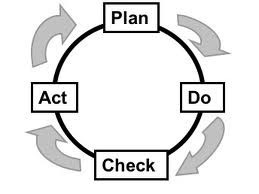
The Plan-Do-Check-Act (PDCA) cycle is a key tool for implementing improvement initiatives. This cycle provides a structured approach to evaluating ideas and measuring results, ensuring that changes are not only implemented but optimised.
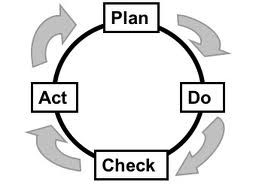
The 4 Steps of the PDCA Cycle:
Step 1: Plan
- Identify your problem or opportunity for improvement.
- Collect relevant data, using tools such as check sheets or surveys.
- Set clear targets to aim for.
Step 2: Do
- Analyse the collected information and develop an action plan.
- Run a trial of your proposed changes to test their effectiveness.
Step 3: Check
- Evaluate the results through methods like control charts or customer feedback.
- Review the impact of the change on both internal processes and customer satisfaction.
Step 4: Act
- If the trial is successful, integrate the changes into your regular processes.
- Communicate the changes to your team and document the results for future reference.
By following the PDCA cycle, your organisation can create a culture of continuous improvement, where small, incremental changes lead to significant gains over time.
Why Should We Adopt a Continuous Improvement Approach in Our Organisation?
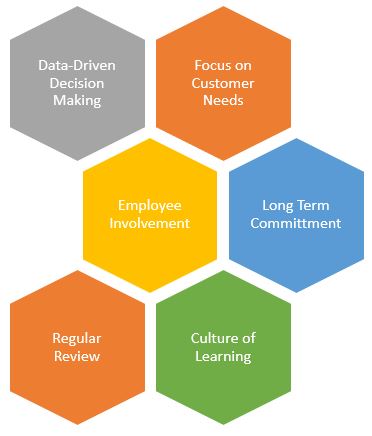
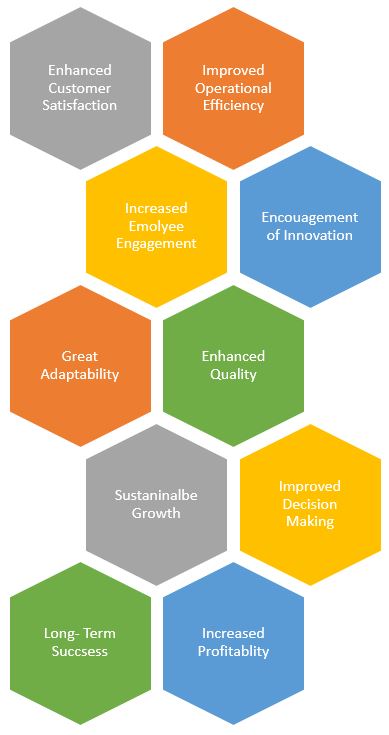
Adopting a continuous improvement approach within your business can offer numerous advantages. Some of the key benefits include:
- Enhanced Customer Satisfaction: Focusing on continuous improvement helps you identify and address customer needs more effectively, leading to higher satisfaction and loyalty.
- Improved Operational Efficiency: By consistently evaluating and refining your processes, you can reduce waste, minimise errors, and streamline operations, ultimately lowering costs and increasing productivity.
- Increased Employee Engagement: Involving employees in the improvement process fosters a sense of ownership and pride in their work. This can lead to higher job satisfaction, increased motivation, and better retention.
- Encouragement of Innovation: Continuous improvement promotes a culture of experimentation and learning, where employees are encouraged to take calculated risks and explore new ideas, leading to more innovative products and services.
- Greater Adaptability: A continuous improvement mindset enables your business to respond more effectively to changing market conditions, customer preferences, and competitive pressures.
- Enhanced Quality: By continuously refining your products, services, and processes, you can improve their quality, which can lead to increased customer satisfaction, better word-of-mouth referrals, and a stronger brand reputation.
- Sustainable Growth: Continuous improvement helps your business maintain a strong foundation by identifying and addressing inefficiencies and bottlenecks, allowing for sustainable and healthy growth over time.
- Improved Decision-Making: Data-driven continuous improvement processes provide valuable insights and information, enabling better-informed decision-making and strategic planning.
- Increased Profitability: By improving operational efficiency, reducing costs, enhancing customer satisfaction, and fostering innovation, continuous improvement can ultimately contribute to higher revenues and increased profitability.
- Long-Term Success: Adopting a continuous improvement mindset helps to create a culture of excellence, resilience, and adaptability, which are essential elements for long-term success in an increasingly competitive business environment.
Whether or not your organisation has international certifications, continuous improvement is critical for success in any business.
What Are Internal Audits?
Internal audits are systematic, independent, and documented processes used to evaluate an organisation’s internal control systems, operations, and practices against established internal certification standards or guidelines.
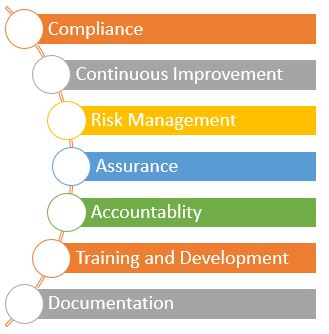
The purpose of internal audits is to ensure compliance, identify areas for improvement, and maintain a strong internal control environment. Regarding internal certification standards, internal audits serve several purposes:
- Compliance: Ensuring adherence to internal policies, procedures, and standards.
- Continuous Improvement: Identifying weaknesses and areas that need attention, which drives efficiency.
- Risk Management: Identifying vulnerabilities and inefficiencies within your business.
- Assurance: Providing confidence to management that internal controls are functioning effectively.
- Accountability: Evaluating departmental performances against established standards.
- Training and Development: Identifying skills gaps and promoting targeted training.
- Documentation: Demonstrating the commitment to high-quality processes.
Where Do We Record Continuous Improvement?
The Continuous Improvement Register (CIR) is a tool used to track, document, and manage improvement initiatives. The register includes:
- A list of improvement opportunities or ideas from employees, customers, suppliers, or management.
- A description of the identified issue or problem.
- The potential impact of the improvement (e.g., cost savings, customer satisfaction).
- Priority or urgency of the improvement.
- The person or team responsible for implementing the improvement.
- Target completion date.
- Current status of the improvement (e.g., not started, in progress, completed).
- Relevant notes or comments.
A designated team or individual typically maintains the CIR, ensuring that improvement efforts are tracked and progress is monitored.
Conclusion
By adopting a continuous improvement approach, your organisation can enhance efficiency, adapt to changing market conditions, and achieve long-term success. The PDCA cycle offers a proven method for implementing improvements, and using a Continuous Improvement Register ensures that efforts are tracked and prioritised.
Key Points to Remember:
- Continuous improvement is a systematic approach to enhancing processes, products, and services.
- The PDCA cycle is key to implementing improvements in a structured way.
- Internal audits support continuous improvement by identifying weaknesses and ensuring compliance.
- A Continuous Improvement Register tracks and manages your improvement initiatives.
By consistently applying the principles of continuous improvement, you can create a more efficient, innovative, and customer-focused organisation.
Contact Us for More Information
If you’re interested in learning more about how continuous improvement can benefit your business or need help implementing it, feel free to contact us. We would be happy to assist you in improving your processes for greater success.
For more resources on continuous improvement, check out this external guide on continuous improvement provided by NSW Health.
