

Ensuring Emergency Preparedness in the workplace is essential to protect employees, customers, and visitors in case of a fire or other emergency. Every organisation must have a clear and effective emergency response plan to minimise risks and ensure a swift, organised evacuation when needed.
Why Emergency Preparedness Matters
Emergencies such as fires, chemical spills, and medical incidents can happen at any time. A well-prepared workplace can significantly reduce injuries, damage, and loss of life. By implementing Emergency Preparedness strategies, businesses can:
- Ensure a safer environment for all workers
- Comply with Australian safety regulations
- Reduce potential financial and legal liabilities
- Improve emergency response times
Key Elements of an Emergency Preparedness Plan
A comprehensive Emergency Preparedness plan should include:
- Emergency Evacuation Procedures
- Emergency Evacuation Diagrams
- Fire Warden Responsibilities
- First Aid and Medical Response
- Regular Drills and Compliance
Emergency Evacuation Procedures
During an emergency, all personnel should follow clear evacuation procedures to ensure a quick and safe exit from the building. Workers must familiarise themselves with assembly areas to ensure everyone is accounted for.
Emergency Evacuation Diagrams
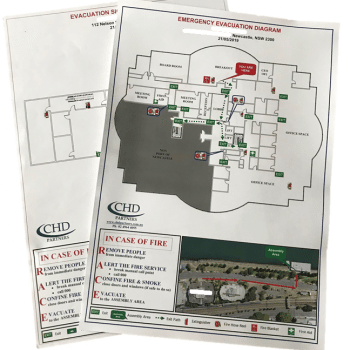
Workplaces must display evacuation diagrams in key locations, including areas open to the public. These diagrams provide essential information, including:
- The fastest and safest evacuation routes
- Emergency exits and alternate exit points
- Locations of fire extinguishers, hose reels, and fire blankets
- First aid stations and defibrillators
Following these diagrams in an emergency can save lives by preventing confusion and ensuring efficient evacuations.
Fire Emergency: The RACE Procedure
To ensure Emergency Preparedness, all employees should follow the RACE procedure during a fire emergency:
R – Remove People: Safely remove anyone from immediate danger
A – Alert Fire Services: Break the manual call point and call 000
C – Confine Fire and Smoke: Close doors and windows if it is safe to do so
E – Evacuate: Move quickly to the designated Assembly Area
Evacuation Drills and Compliance
Under Australian Standard 3745, businesses must conduct at least one emergency evacuation drill per year. These drills help:
- Test the efficiency of the evacuation plan
- Identify weaknesses in emergency response procedures
- Ensure employees understand their roles in an emergency
A well-planned drill is not a surprise event—employees should be informed in advance and provided with clear instructions.
Fire Wardens: A Key Role in Emergency Preparedness
Fire wardens play a crucial role in Emergency Preparedness. Their responsibilities include:
- Leading evacuations and guiding workers to safety
- Communicating with emergency services
- Conducting headcounts at assembly areas
- Ensuring fire extinguishers and emergency exits remain accessible
Employers should carefully select and train fire wardens to maintain a safe and prepared workplace.
First Aid in the Workplace
Businesses must have a sufficient number of trained first aiders to provide immediate medical assistance. According to the Model Code of Practice for First Aid in the Workplace, the requirements are:
- Low-risk workplaces: 1 first aider per 50 workers
- High-risk workplaces: 1 first aider per 25 workers
- Remote high-risk workplaces: 1 first aider per 10 workers
Having trained first aiders on-site can reduce the severity of injuries and improve survival rates in medical emergencies.
For more details on Australian workplace emergency plans, visit Safe Work Australia.
Get Expert Assistance
A well-designed Emergency Evacuation Diagram is essential for workplace safety. CHD Partners provides expert solutions to help businesses comply with Australian safety regulations.
📞 Call: 4964 4055
📧 Email: [email protected]
🌐 Contact us
Conclusion
Emergency Preparedness is not just about compliance—it is about ensuring the safety and well-being of everyone in the workplace. A well-planned evacuation procedure, properly trained fire wardens, and readily available first aid resources can make all the difference in an emergency.
By taking the necessary steps today, businesses can prevent chaos, reduce risks, and protect lives. Whether it’s updating emergency diagrams, conducting regular drills, or ensuring adequate first aid coverage, every organisation has a responsibility to be prepared.
Invest in Emergency Preparedness now to create a safer, more resilient workplace.
