

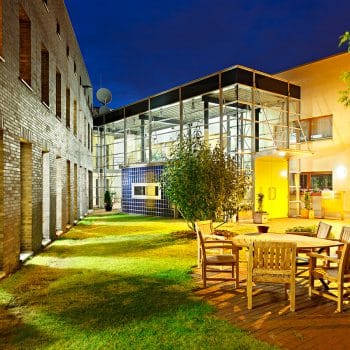
The Importance of Crime Prevention Lighting
Crime Prevention Lighting plays a crucial role in enhancing public safety, deterring criminal activity, and fostering a sense of security in communities. A well-lit environment reduces opportunities for crime by improving visibility, surveillance, and situational awareness.
Poor lighting can create blind spots, increasing the fear of crime and providing cover for offenders. On the other hand, strategically placed lighting discourages unlawful activities and improves offender detection.
Crime and fear of crime reduction are specified as key objectives in the Australian Lighting Standard AS1158, which provides guidelines for public streets, car parks, and pedestrian areas.
Key Benefits of Crime Prevention Lighting
✔ Reduces criminal activity – Well-lit areas eliminate hiding spots and increase natural surveillance.
✔ Enhances public confidence – People feel safer in illuminated spaces, promoting community interaction.
✔ Improves CCTV effectiveness – Good lighting enhances video clarity and assists law enforcement.
✔ Supports emergency response – Adequate lighting allows security personnel and first responders to navigate efficiently.
✔ Minimizes accidents – Illuminated walkways, car parks, and entryways reduce the risk of falls or collisions.
Essential Crime Prevention Lighting Strategies
1. Eliminating Shadows and Dark Spots
- Bright spots and shadows should be avoided where possible.
- Vulnerable areas and potential hiding spots should be illuminated brighter than surrounding areas to expose threats.
- Pathways, alleyways, and entrances should be evenly lit to prevent criminals from exploiting dark zones.
2. Meeting and Exceeding Australian Lighting Standards (AS1158)
- Public lighting should meet Australian Standards AS1158, which sets minimum lux levels for streets, parks, and pedestrian areas.
- Facilities catering to elderly populations should have twice the brightness of standard lighting to account for age-related vision decline.
3. Enhancing Visibility Around Entrances and Exits
- Lighting should flow throughout the development and be intensified near doorways.
- Emergency exits, signage, and surveillance areas should be well-lit to ensure quick and safe navigation.
4. Implementing Motion-Activated and Timed Lighting
- Motion sensor lights deter trespassers and alert residents or security personnel.
- Timed lighting systems should align with high-traffic periods to maintain efficiency while reducing energy costs.
5. Selecting the Right Lighting Type
- Deluxe cool white fluorescent lamps provide better color rendition and enhanced visibility.
- Mercury vapor (white light) is preferred for residential areas to improve perception and reduce fear of crime.
- Solar-powered LED lighting is a sustainable alternative that ensures illumination in remote or off-grid locations.
6. Improving Vehicle Access and Surveillance
- CCTV-monitored vehicle access points should have sufficient luminous levels to enhance video recording quality.
- Intersections, parking lots, and bike paths should be well-lit to improve safety for pedestrians and drivers.
7. Regular Lighting Maintenance and Audits
- Routine checks should be conducted to detect faulty bulbs and repair defective lighting systems.
- Smart lighting solutions with remote monitoring can provide real-time alerts for maintenance needs.
How Crime Prevention Lighting Transforms Public Spaces
Crime Prevention Lighting is an effective deterrent in various environments, including:
🏢 Commercial properties – Reduces burglary risks and improves customer safety.
🏘️ Residential areas – Enhances neighborhood security and fosters a safer community.
🚶 Pedestrian pathways – Prevents assaults and ensures safer nighttime navigation.
🚗 Parking lots – Increases visibility for both drivers and security cameras.
🎡 Public parks and recreational spaces – Encourages safer social interactions.
Implementing Crime Prevention Lighting for Maximum Impact
To ensure effective crime prevention lighting, communities, businesses, and local councils should:
✅ Conduct lighting audits to identify high-risk areas.
✅ Follow AS1158 lighting standards to maintain compliance.
✅ Invest in motion-activated and smart lighting systems.
✅ Ensure routine maintenance and upgrades for long-term efficiency.
For more safety recommendations, visit NSW Police Safer by Design.
If you’re looking for expert security solutions and lighting strategies, contact us today for professional guidance tailored to your needs.
By implementing Crime Prevention Lighting strategies, we can create safer, more secure environments that deter crime and enhance public confidence.
