

Many small and medium businesses assume that providing a first aid kit and appointing a first aider is enough to meet their work health and safety obligations. However, effective workplace first aid arrangements require a more considered, risk-based approach.
A first aid risk assessment helps an organisation determine the first aid equipment, trained first aiders, facilities and emergency procedures that are reasonably practicable for its workplace. It ensures first aid resources are appropriate for the work being performed, the people involved and the environment in which they operate.
What is a First Aid Risk Assessment?
A first aid risk assessment is a structured review of your workplace to identify:
- The types of injuries or illnesses that could occur.
- The likelihood and severity of those injuries.
- The first aid treatment that may be required.
- The resources needed to provide prompt and effective assistance.
The assessment should be documented and reviewed whenever workplace activities, staffing or risks change.
How to Assess First Aid Needs in Your Workplace
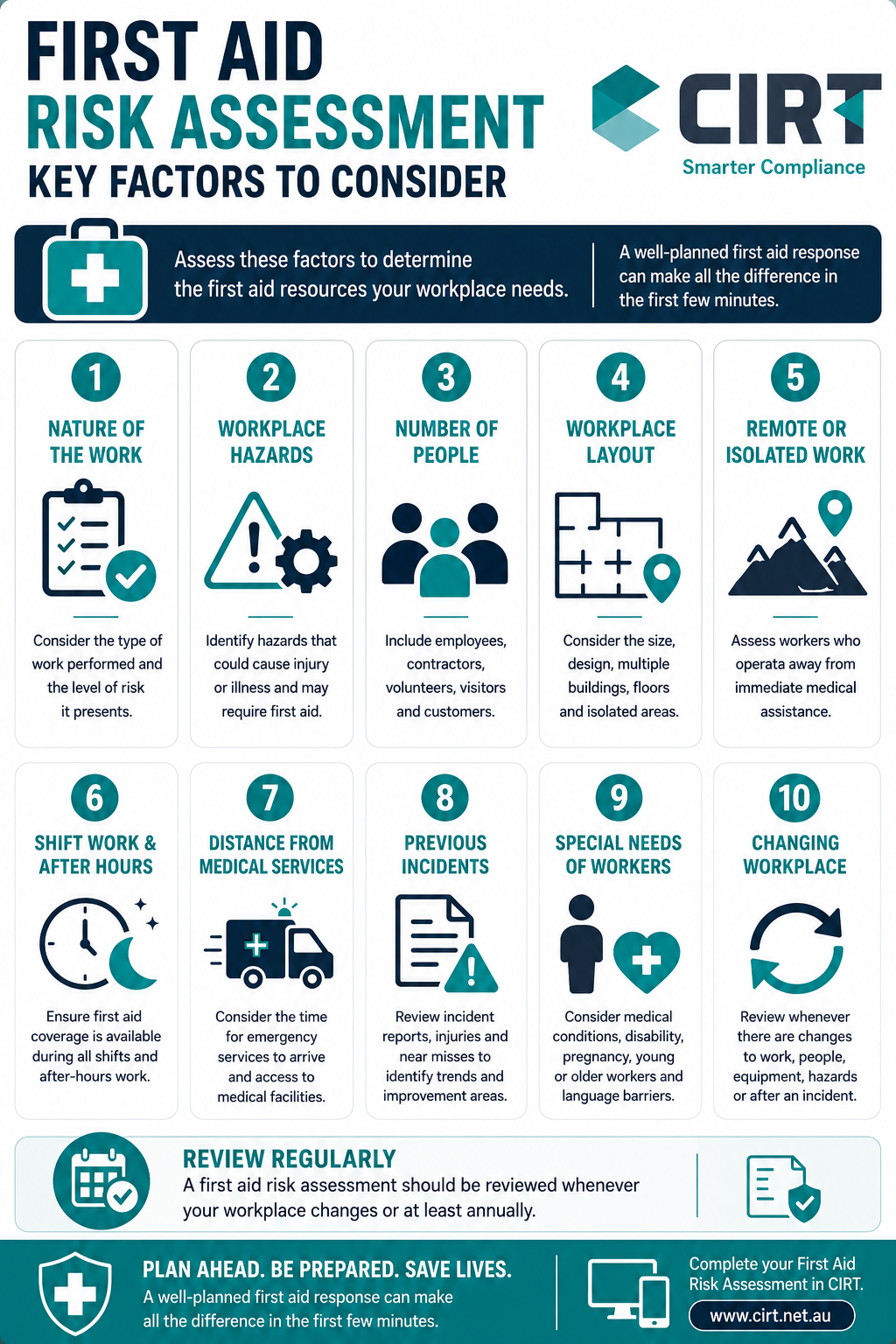
1. Nature of the Work
The first consideration in a first aid risk assessment is the type of work being undertaken.
For example:
- Office environments generally present lower first aid risks.
- Manufacturing, construction and mining workplaces have a higher risk of serious injuries.
- Hospitality venues may experience burns, cuts, slips and customer-related incidents.
- Healthcare and disability services may involve exposure to infectious diseases and manual handling injuries.
The greater the hazard, the greater the level of first aid resources required.
2. Specific Workplace Hazards
Identify hazards that could require immediate first aid, including:
- Hazardous chemicals
- Machinery and plant
- Electrical work
- Working at heights
- Confined spaces
- Hot works and welding
- Manual handling
- Mobile plant and vehicles
- Violence and aggression
- Heat stress or cold environments
- Biological hazards
Each hazard may require specialised first aid equipment or additional training.
3. Size of the Workplace
Larger workplaces often require:
- Multiple first aid kits
- Additional trained first aiders
- Clearly identified first aid stations
- Procedures to ensure first aid can be accessed quickly
Large facilities should also consider the time it takes for a first aider to reach an injured worker.
4. Number of Workers and Other People
The assessment should consider:
- Total employees.
- Contractors.
- Labour hire workers.
- Volunteers.
- Visitors.
- Customers.
All people who may be affected by a workplace incident should be considered.
5. Workplace Layout
Consider whether people work:
- Across multiple buildings.
- On different floors.
- In isolated work areas.
- Outdoors.
- In warehouses or large production areas.
The layout may require multiple first aid kits or additional trained personnel.
6. Remote or Isolated Work
Workers operating away from immediate medical assistance require additional planning.
Examples include:
- Field service technicians.
- Community support workers.
- Maintenance personnel.
- Agricultural workers.
- Mine sites.
Controls may include:
- Remote first aid kits.
- Communication equipment.
- Satellite phones.
- Emergency response procedures.
- Higher-level first aid training.
7. Shift Work
Businesses operating:
- Nights
- Weekends
- Public holidays
- 24-hour operations
must ensure first aid coverage is available during every shift, not only standard business hours.
8. Distance from Medical Services
Consider:
- How long an ambulance takes to arrive.
- Distance to the nearest hospital.
- Access difficulties.
- Rural or regional locations.
Longer emergency response times generally require greater workplace first aid capability.
9. Previous Incidents
Review historical information such as:
- Incident reports
- Injury records
- Near misses
- Workers’ compensation claims
- Hazard reports
Past events often identify where workplace first aid arrangements need improvement.
10. Special Needs of Workers
Some workplaces include workers with medical conditions, disabilities, pregnancy, language barriers, or workers who are young or older. These factors may influence emergency response planning and first aid arrangements.
What First Aid Resources Does Your Workplace Need?
Once the first aid risk assessment is complete, the organisation can determine the appropriate first aid resources for its workplace, including:
- The number of trained first aiders
- The type and quantity of first aid kits
- The location of first aid kits
- First aid rooms, where required
- Automated external defibrillators (AEDs)
- Emergency showers and eyewash stations
- Communication equipment
- Emergency response procedures
The assessment should clearly explain why these resources have been selected.
When Should You Review a First Aid Risk Assessment?
Reviewing a first aid risk assessment ensures that workplace first aid arrangements continue to match current risks.
A first aid risk assessment is not a one-off exercise. It should be reviewed whenever:
- New equipment is introduced
- New chemicals are used
- Work processes change
- New hazards are identified
- The workforce changes significantly
- An incident or near miss occurs
- Workplace alterations are made
- Regular management reviews are conducted
Regular reviews ensure workplace first aid arrangements remain appropriate as the business evolves.
More Than Compliance
Completing a first aid risk assessment is about more than meeting legal obligations. When someone is seriously injured, the quality of the first few minutes can significantly influence their recovery. Appropriate planning allows workers to receive prompt treatment while emergency services are on their way.
For business owners, a documented workplace first aid risk assessment also demonstrates that they have considered their legal duties and taken reasonably practicable steps to protect workers. This evidence can be valuable during a regulatory investigation, insurance claim or legal proceeding.
By reviewing the first aid risk assessment regularly, businesses can keep their emergency arrangements aligned with changing workplace risks.
A well-prepared first aid risk assessment forms the foundation of an effective first aid management system. A documented first aid risk assessment provides confidence that the organisation has planned for foreseeable emergencies and has appropriate resources available to respond quickly when every minute matters.
If you need support with your workplace safety obligations, contact CHD Partners to discuss your requirements.
References
- Safe Work Australia, First Aid in the Workplace – Code of Practice.
- SafeWork NSW, First Aid in the Workplace Code of Practice.
- Safe Work Australia, Model Code of Practice: First Aid in the Workplace.
- Relevant Work Health and Safety Act and Work Health and Safety Regulation applicable in your jurisdiction.
